
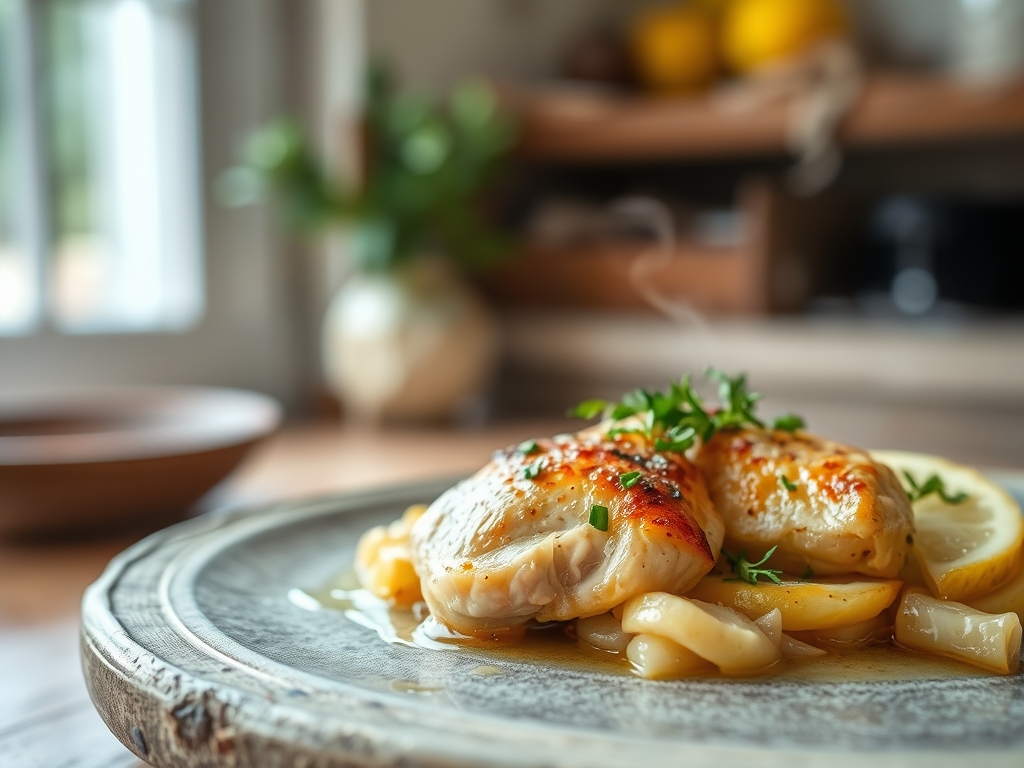
Imagine the scent of citrus oils aerosolizing in your kitchen; it is a bright, sharp fragrance that cuts through the heavy humidity of a Tuesday afternoon. When you search for slow cooker lemon chicken recipes, you are usually looking for a miracle that balances convenience with high-end flavor profiles. This dish delivers a piquant punch that transforms humble poultry into a masterpiece of acid and aromatics.
The magic of this specific preparation lies in the tension between the bright lemon juice and the deep, savory notes of rendered chicken fat. We are not just tossing ingredients into a ceramic pot and hoping for the best. We are engineering a sauce that is viscous, glossy, and perfectly balanced. By the time the timer dings, the chicken will be fork-tender but not mushy, bathed in a golden reduction that tastes like a summer evening in the Mediterranean. Grab your favorite apron and let us dive into the molecular mechanics of the ultimate weeknight luxury.
The Gathers:
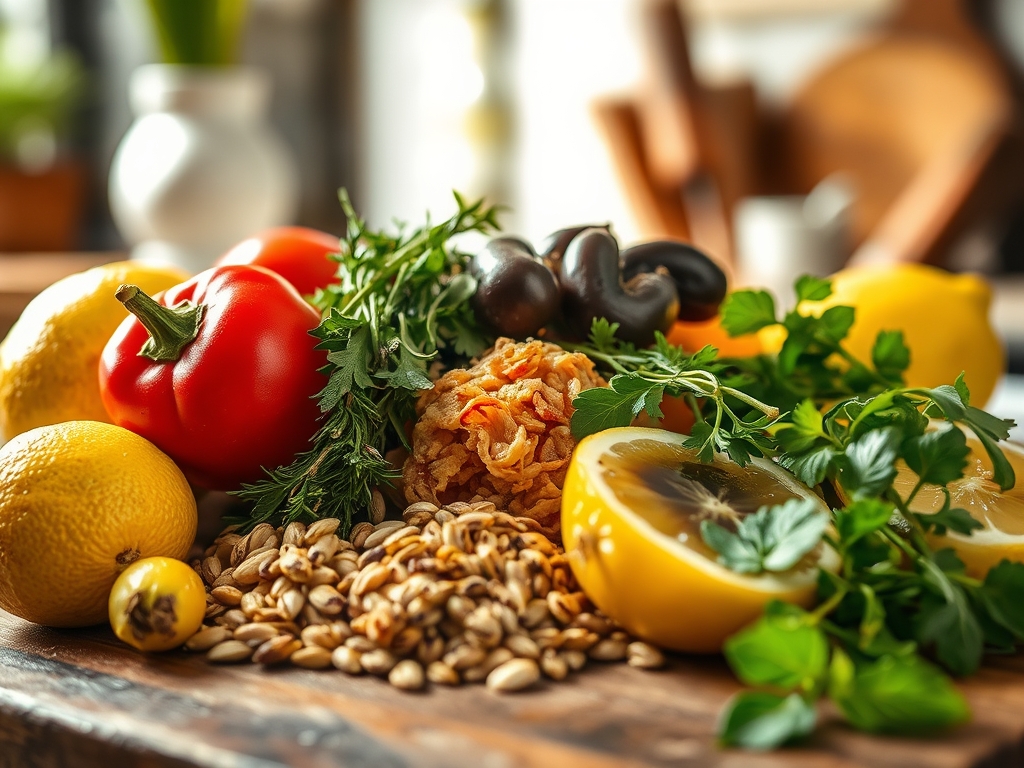
Before we engage the heating element, we must respect the mise-en-place. Use a digital scale for your dry spices to ensure consistency; volume measurements like teaspoons can be deceptively inaccurate depending on the grind size of your salt. You will need 3 pounds of boneless, skinless chicken thighs. Thighs are superior here because their higher connective tissue content (collagen) breaks down into gelatin, providing a luxurious mouthfeel that breasts simply cannot match.
For the aromatics, gather six cloves of garlic, one large shallot, and three organic lemons. We use organic because we are utilizing the zest; non-organic peels often carry a bitter wax coating. You will also need high-quality chicken bone broth, honey for glucose-driven browning, and fresh thyme.
Smart Substitutions: If you are avoiding refined sugars, substitute the honey with two tablespoons of maple syrup or a splash of white balsamic vinegar. For a dairy-free finish that still feels creamy, swap the final butter whisk-in for a tablespoon of cold-pressed avocado oil. If you lack fresh thyme, use dried oregano, but reduce the quantity by half as dried herbs have a more concentrated volatile oil profile.
The Clock
Efficiency in the kitchen is about "Chef's Flow," which is the art of overlapping tasks to minimize downtime. Your active prep time is exactly 15 minutes. This includes the time to zest the lemons with a microplane and finely mince the shallots.
The cooking duration is the critical variable. On the "Low" setting, you are looking at 4 to 5 hours. On "High," the window shrinks to 2 to 3 hours. I always recommend the low and slow approach. High heat can cause the muscle fibers to contract too violently, squeezing out moisture before the collagen has a chance to liquefy. Plan to start this at noon for a 6:00 PM dinner, allowing a 30-minute "buffer" for the sauce reduction phase.
The Masterclass
1. The Maillard Sear
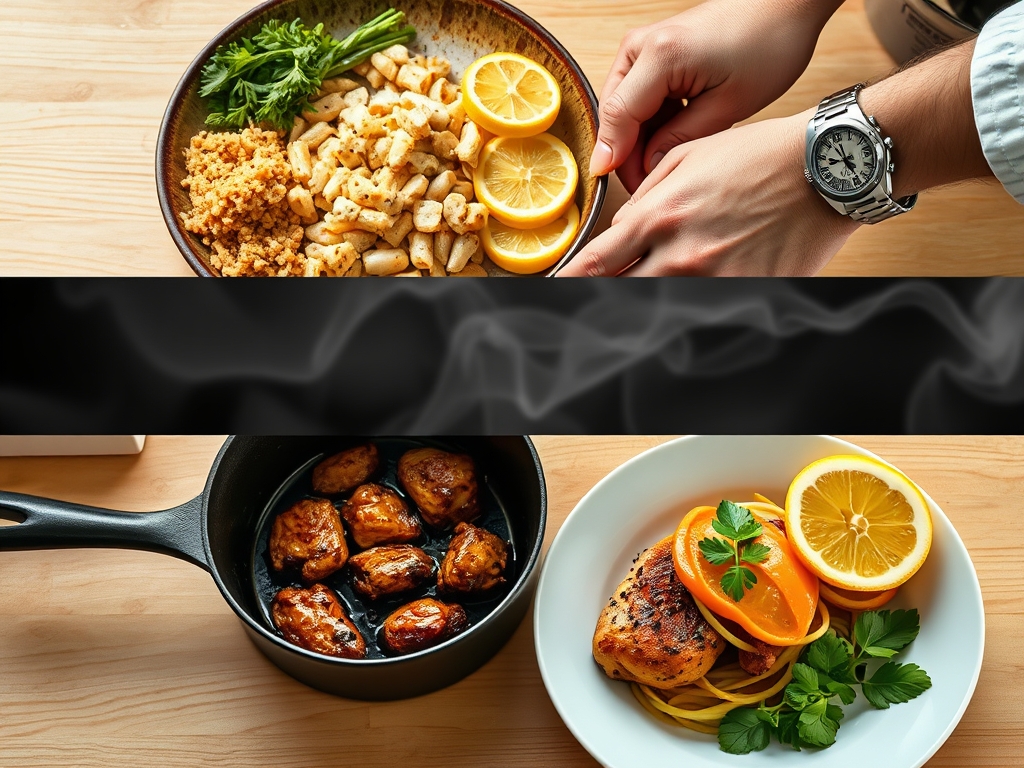
Place a heavy-bottomed skillet over medium-high heat. Pat the chicken dry with paper towels to remove surface moisture; water is the enemy of browning. Sear the thighs in batches until a golden crust forms.
Pro Tip: This step triggers the Maillard reaction, a chemical dance between amino acids and reducing sugars. This creates hundreds of different flavor compounds that a slow cooker cannot produce on its own due to the presence of steam.
2. Deglaze and Infuse
Remove the chicken and add a splash of broth to the hot skillet. Use a bench scraper or wooden spoon to lift the "fond," those brown bits stuck to the bottom. Add the minced shallots and garlic, sautéing only until translucent.
Pro Tip: Deglazing captures the concentrated proteins left in the pan. By infusing the aromatics in the fat before adding them to the slow cooker, you ensure the garlic notes are mellow and sweet rather than sharp and raw.
3. The Slow Bath
Transfer the chicken and the skillet contents into the slow cooker. Pour in the remaining broth, lemon juice, honey, and thyme. Ensure the liquid covers at least half of the meat to facilitate even heat distribution through convection.
Pro Tip: Acid acts as a denaturant. The lemon juice begins to break down the protein structures immediately, but the slow application of heat prevents the meat from becoming "chalky" by moderating the speed of this breakdown.
4. The Emulsion Finish
Once the timer is up, remove the chicken. Pour the remaining liquid into a saucier and simmer on the stove. Whisk in a slurry of cornstarch or cold butter to create a glossy, stable emulsion.
Pro Tip: This is called reduction. By evaporating the excess water, you concentrate the solutes (flavors). Whisking in cold butter at the end (monter au beurre) creates a temporary emulsion that coats the tongue and carries the lemon flavor longer.
The Deep Dive
From a nutritional standpoint, this dish is a powerhouse. A standard serving contains approximately 320 calories, 38 grams of protein, and only 8 grams of carbohydrates. It is naturally gluten-free, provided your broth is certified. For a Keto version, simply omit the honey and use xanthan gum as a thickener instead of cornstarch. For a Vegan alternative, use large chunks of cauliflower or oyster mushrooms and reduce the cooking time to 90 minutes.
The Fix-It:
- Too Sour: If the lemon is overpowering, add a pinch of baking soda. It will foam slightly as it neutralizes the citric acid.
- Too Thin: If the sauce is watery, do not just cook it longer. Use a whisk to incorporate a "beurre manié" (equal parts flour and softened butter) to instant-thicken.
- Tough Meat: This usually means the chicken was undercooked, not overcooked. Give it another 30 minutes for the collagen to fully melt.
Meal Prep: To maintain "day-one" quality, store the sauce and chicken together. When reheating, use a low power setting on the microwave or a covered pan on the stove. This prevents the proteins from tightening up and becoming rubbery through rapid moisture loss.
The Wrap-Up
Mastering slow cooker lemon chicken recipes is about more than just convenience; it is about understanding how acid, heat, and time interact to create something spectacular. This dish is bright enough for a spring luncheon yet comforting enough for a rainy winter night. When you pull those tender pieces of chicken out of the pot, you aren't just serving dinner; you are serving a scientifically calibrated experience of zest and soul. Now, go grab those lemons and start searing!
The Kitchen Table
Can I use chicken breasts instead of thighs?
Yes, but reduce the cooking time by 60 minutes. Breasts lack the fat and collagen of thighs, making them prone to drying out. Use a digital thermometer to ensure they do not exceed an internal temperature of 165 degrees Fahrenheit.
Why is my lemon sauce bitter?
Bitterness usually comes from the white pith of the lemon or overcooked garlic. Ensure you only use the yellow zest and add the fresh lemon juice toward the end of the process if you are sensitive to cooked citrus notes.
How do I get a thicker sauce without flour?
You can temper in two egg yolks or use a splash of heavy cream at the end. Alternatively, blend a portion of the cooked aromatics and one piece of chicken back into the sauce to create a rustic, thick body.
Can I put frozen chicken in the slow cooker?
It is not recommended for safety reasons. Frozen meat stays in the "danger zone" (40 to 140 degrees Fahrenheit) for too long, allowing bacteria to multiply. Always thaw your poultry completely in the refrigerator before starting the recipe.
How long does this stay fresh in the fridge?
You can safely store this in an airtight container for up to four days. The flavors actually deepen over the first 24 hours as the aromatics continue to permeate the muscle fibers of the chicken.