

Picture this: a heavy, cast-iron Dutch oven sits on your counter, its lid heavy with the promise of a transformation. The air in your kitchen is thick with the scent of caramelized onions and the deep, bass note of rendered fat. When it comes to slow roast brisket of beef recipes, we are not just cooking dinner; we are performing a structural overhaul of a stubborn, hardworking muscle. Most people fear the brisket because it is notoriously fickle, but today, we are going to master the chemistry of the "stall" and the magic of collagen conversion.
The secret to that fork-tender, velvet-textured slice lies in the balance between heat and hydration. We are going to treat this cut like a fine silk garment, using low temperatures to gently unwind the connective tissues without squeezing out the moisture. By the time we are done, you will have a roast that does not just fall apart; it melts with a piquant richness that only patience can produce. Grab your apron and your sharpest chef knife. We are diving into the molecular architecture of the perfect Sunday roast.
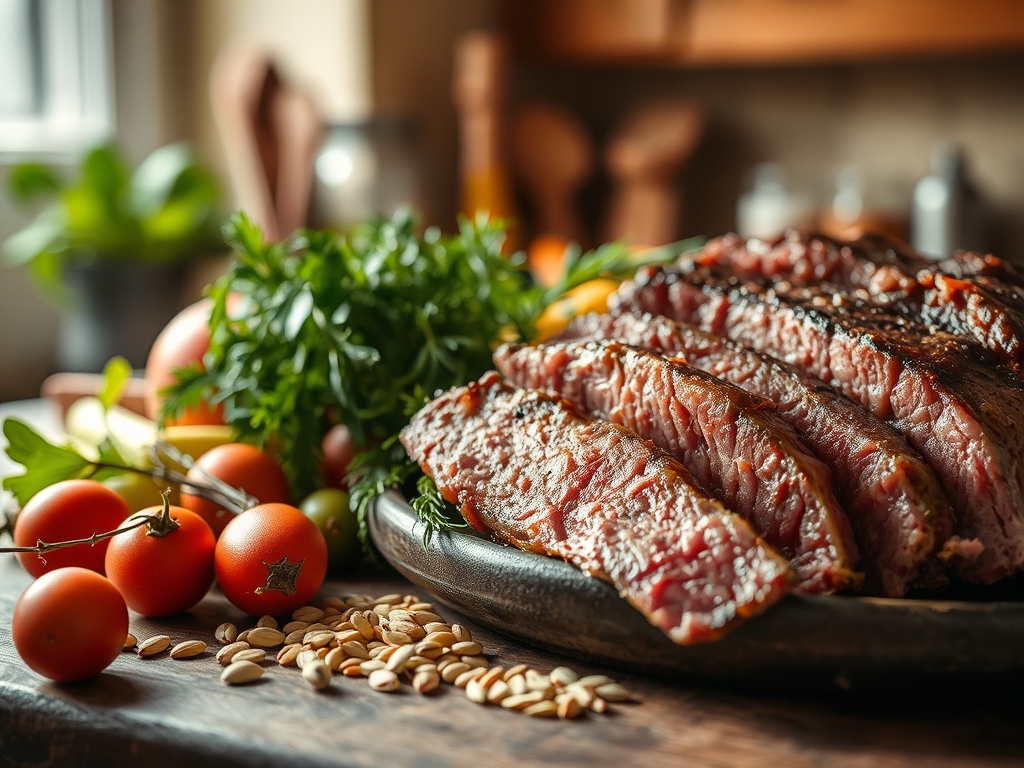
The Gathers:
Before we ignite the flame, we must assemble our laboratory. You will need a five to six pound packer brisket, preferably with a thick fat cap. This fat is our insurance policy; it will render slowly, self-basting the meat from the top down. For the aromatic base, gather four large yellow onions, a head of garlic, and a bundle of fresh thyme and rosemary. The liquid component is crucial for heat transfer. I use a high-quality beef bone broth, a splash of apple cider vinegar to provide a bright, acidic counterpoint, and a half-cup of dry red wine like a Cabernet Sauvignon to deglaze the pan.
For the dry rub, precision is key. Use a digital scale to measure out kosher salt, cracked black pepper, smoked paprika, and mustard powder. The salt is essential for denaturing the surface proteins, allowing seasoning to penetrate deep into the fibers.
Smart Substitutions: If you are avoiding alcohol, replace the red wine with a tablespoon of Worcestershire sauce and extra broth to maintain the viscous body of the braising liquid. For a nightshade-free version, swap the paprika for ground cumin and a touch of coriander to maintain that earthy, smoky depth without the heat.
The Clock
Efficiency in the kitchen is about "Chef's Flow," the art of overlapping tasks so you are never standing idle.
- Prep Time: 45 minutes. This includes trimming the fat cap to a uniform quarter-inch thickness and allowing the meat to reach room temperature.
- Active Cooking: 30 minutes. This is your high-energy phase: searing the meat and sautéing the aromatics.
- The Long Sleep: 6 to 8 hours. This is the hands-off period where the oven does the heavy lifting at a steady 275 degrees Fahrenheit.
- The Rest: 45 minutes. Never skip this. It allows the internal juices to redistribute.
The Masterclass
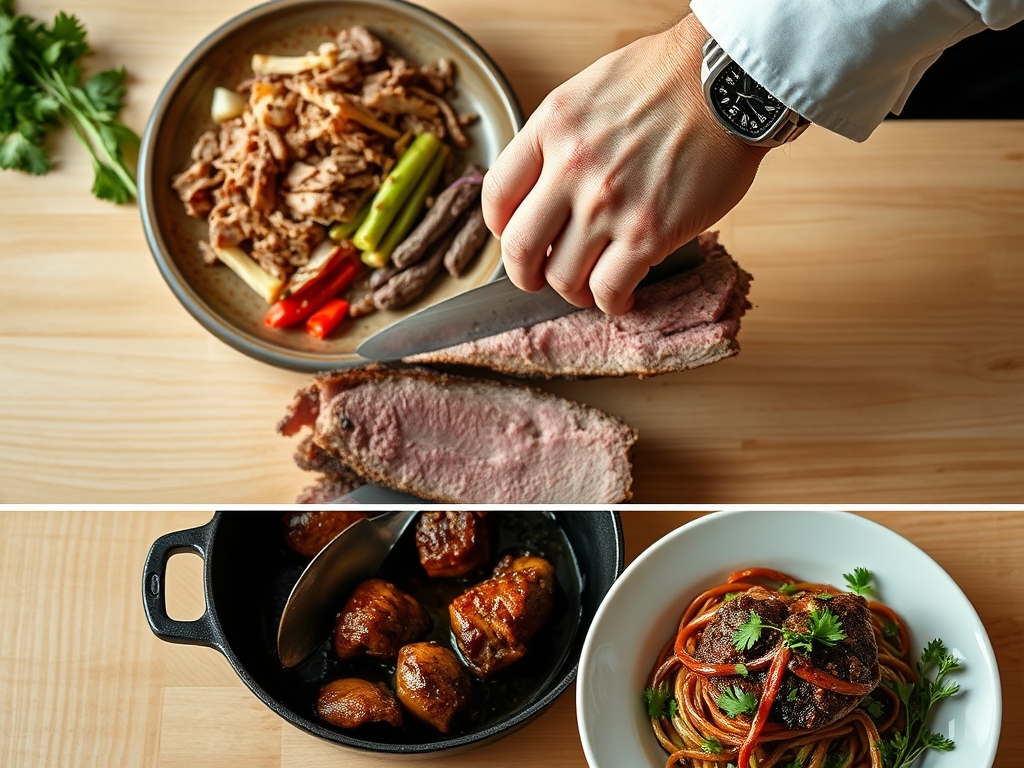
1. The Strategic Trim
Using a sharp boning knife, trim the silver skin and excess hard fat from the brisket. You want a smooth surface so the rub adheres evenly. Leave about a quarter-inch of the fat cap to protect the meat during the long roast.
Pro Tip: This is about lipid insulation. A uniform fat layer ensures that the heat penetrates the meat at a consistent rate, preventing the thinner "flat" end from drying out before the "point" is tender.
2. The Aggressive Sear
Heat a heavy-bottomed skillet or your Dutch oven over medium-high heat. Add a high-smoke-point oil and sear the brisket on all sides until a deep, mahogany crust forms. Use heavy-duty tongs to rotate the meat safely.
Pro Tip: This is the Maillard Reaction. By browning the surface at high heat, you create hundreds of different flavor compounds that simply cannot be developed through boiling or steaming alone.
3. The Aromatic Foundation
Remove the meat and toss in your sliced onions. Use a bench scraper to move them around, picking up the browned bits (the fond) from the bottom of the pan. Once the onions are translucent, add the garlic and herbs.
Pro Tip: This process is called sweating. It releases the sugars in the onions, which will later provide the body and sweetness for your finished sauce.
4. The Deglaze and Infuse
Pour in your wine and use a wooden spoon to scrape the bottom of the pot. Let the liquid reduce by half before adding the beef broth and vinegar. This creates a concentrated, piquant braising base.
Pro Tip: Alcohol acts as a solvent. It pulls out flavor molecules from the spices and meat that are fat-soluble and water-insoluble, creating a more complex flavor profile.
5. The Low and Slow Bath
Place the brisket back into the pot, fat-side up. The liquid should come about halfway up the sides of the meat. Cover with a tight-fitting lid or a double layer of foil to prevent steam from escaping.
Pro Tip: We are targeting collagen conversion. At temperatures between 160 and 180 degrees Fahrenheit, tough connective tissue dissolves into gelatin, which gives the meat its silky, succulent mouthfeel.
6. The Arduous Wait
Slide the pot into the oven. Resist the urge to peek. Every time you open the door, you lose heat and moisture, extending the cook time and risking a dry result.
Pro Tip: This is about thermal equilibrium. Maintaining a constant, low-energy environment allows the center of the meat to reach the target temperature without the exterior overcooking.
7. The Testing Phase
After six hours, check the meat with a fork. It should yield with almost no resistance. If you use a meat thermometer, you are looking for an internal temperature of roughly 200 to 205 degrees Fahrenheit.
Pro Tip: This is the fork-tender threshold. Even if the meat is "cooked" at 165 degrees, it won't be tender until the internal temperature stays high enough for long enough to melt the internal fibers.
8. The Essential Rest
Transfer the brisket to a cutting board and tent it loosely with foil. Let it sit for at least 30 to 45 minutes before slicing.
Pro Tip: This prevents moisture loss. During cooking, muscle fibers contract and push juice outward. Resting allows those fibers to relax and reabsorb the liquid, ensuring a moist slice.
9. The Final Slice
Always slice against the grain. Look for the direction the muscle fibers are running and cut perpendicular to them. Use a long, serrated knife or a dedicated slicing knife for clean edges.
Pro Tip: Cutting against the grain shortens the muscle fibers, making the meat significantly easier to chew and enhancing the perception of tenderness.
The Deep Dive
Macro Nutrition: A standard 4-ounce serving of slow-roasted brisket provides approximately 28 grams of protein and 15 to 20 grams of fat. It is a dense source of Vitamin B12, Zinc, and Selenium, making it a powerhouse for metabolic health.
Dietary Swaps:
- Keto: This recipe is naturally keto-friendly. Just ensure your beef broth has no added sugars.
- Vegan: Swap the brisket for large "steaks" of roasted lion's mane mushrooms or a whole head of cauliflower, reducing the cook time to 45 minutes.
- Gluten-Free: Ensure your beef broth and any thickeners used for the gravy are certified GF.
The Fix-It:
- Tough Meat: If it is still chewy, it simply hasn't cooked long enough. Put it back in for another hour.
- Dry Meat: This usually happens if the lid wasn't tight. Shred the meat and toss it in the braising liquid to rehydrate the fibers.
- Salty Sauce: If the reduction is too salty, add a peeled potato to the pot for 20 minutes to absorb excess sodium, then discard the potato.
Meal Prep & Reheating: Brisket is actually better on day two. To reheat, slice the meat cold and place it in a baking dish with a splash of leftover juice. Cover tightly and warm at 300 degrees. This gentle reheating prevents the proteins from toughening up a second time.
The Wrap-Up
Mastering slow roast brisket of beef recipes is a rite of passage for any serious home cook. It requires you to move past the "set it and forget it" mentality and embrace the science of heat transfer and protein structure. By controlling the sear, the braise, and the rest, you turn a budget-friendly cut of beef into a centerpiece that commands respect. Now, grab your saucier, whisk up that remaining liquid into a glossy gravy, and get ready for the best meal of your week!
The Kitchen Table
How do I know which way the grain runs?
Look for the long, parallel lines on the surface of the raw meat. After cooking, if you are unsure, cut a small corner off; if the meat looks "stringy," you are cutting with the grain. Rotate 90 degrees.
Can I cook brisket in a slow cooker?
Yes, but you lose the Maillard crust. Always sear the meat in a heavy-bottomed skillet first before transferring it to the slow cooker to ensure you develop those essential deep, savory flavors.
What is the "stall" in brisket cooking?
The stall occurs when the meat's internal temperature stops rising as moisture evaporates from the surface, cooling it down. Don't panic or raise the heat; just wait it out or wrap the meat in foil.
Why is my brisket dry even though it's in liquid?
If the oven temperature is too high, the muscle fibers squeeze shut like a wrung-out sponge, pushing all the juice out. Keep your oven at 275 degrees Fahrenheit or lower for the best results.
How much brisket should I buy per person?
Plan on about a half-pound of raw meat per person. Brisket shrinks significantly during the long roasting process as the fat renders and the water evaporates, so always round up.