
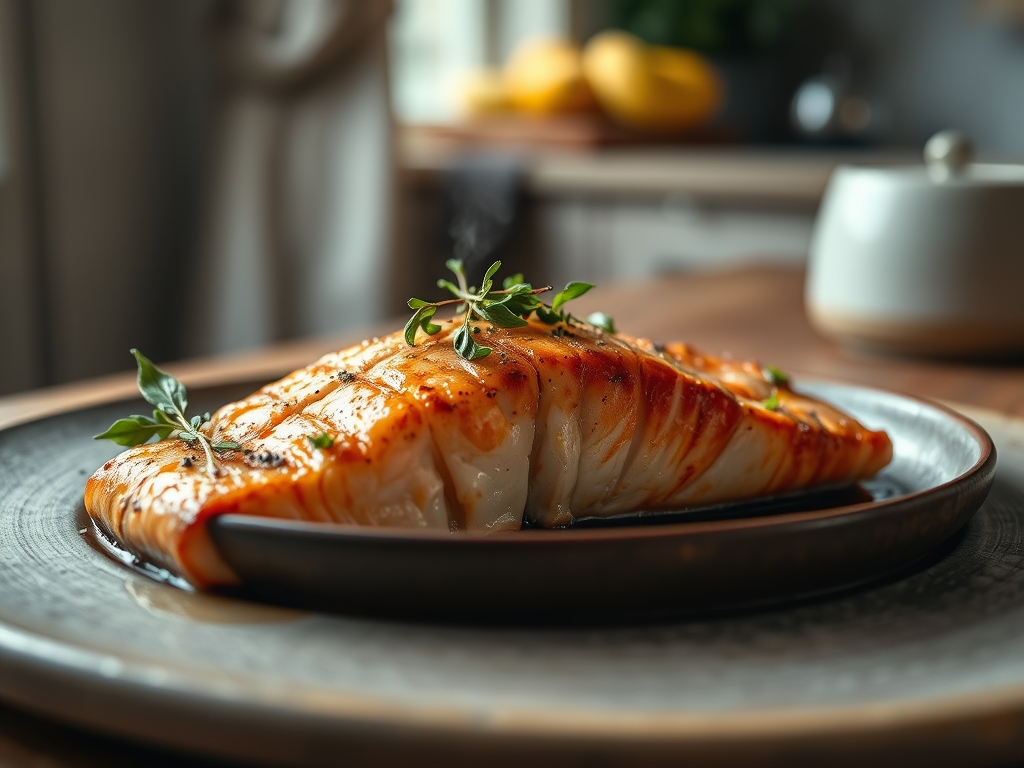
Imagine the sharp, rhythmic click of a chef knife against a wooden board and the sudden, aggressive hiss of a cold fillet hitting a searing pan. We are chasing that elusive restaurant quality today; specifically, the buttery, flake-apart texture found in gordon ramsay salmon recipes baked to absolute perfection. Most home cooks fear the fish because it is temperamental, yet the secret lies in heat management and moisture retention. We are not just cooking dinner; we are engineering a masterpiece of protein and fat. Salmon is a fatty, cold water fish that demands respect, and when you treat it with the right technical precision, it rewards you with a silken interior and a crust that shatters under the fork. Whether you are hosting a high stakes dinner party or just treating yourself to a Tuesday night win, mastering these methods will elevate your kitchen game from amateur to executive. Let us dive into the chemistry of the sear, the logic of the oven, and the art of the finish.
The Gathers:
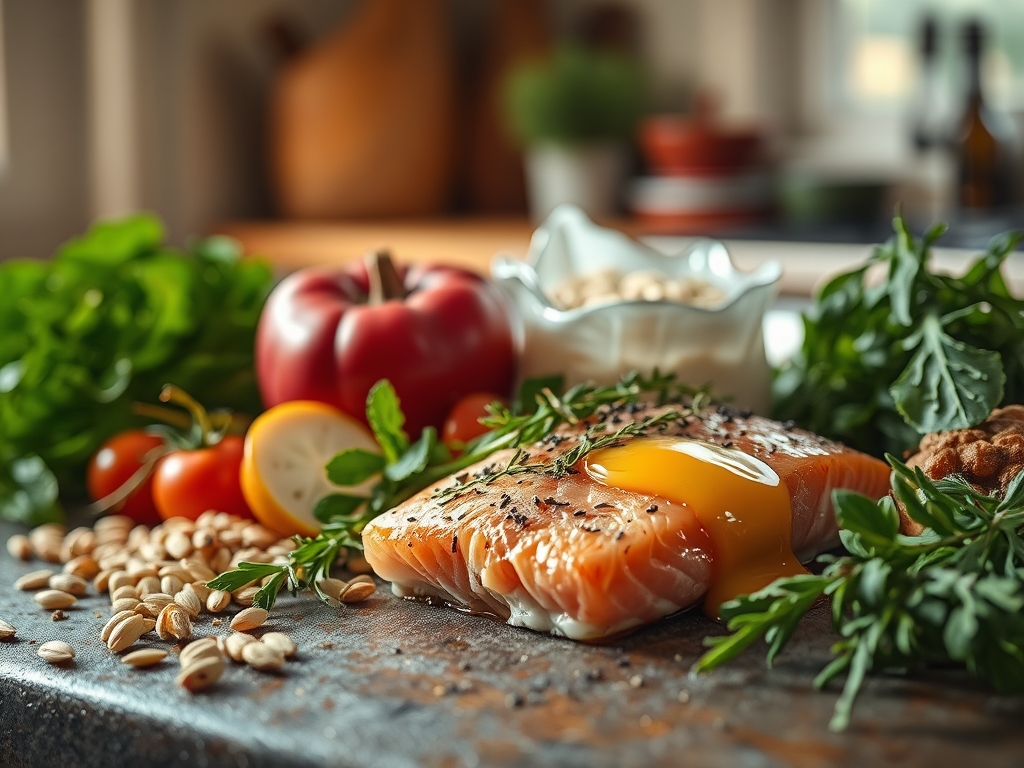
To achieve the results seen in the professional kitchen, your mise-en-place must be impeccable. You will need center-cut Atlantic or King salmon fillets; look for deep pigmentation and firm flesh that bounces back when pressed. The fat lines, or intramuscular lipids, should be white and distinct. You will also need a high-smoke-point oil like grapeseed or avocado oil to facilitate the Maillard reaction without scorching. For the aromatics, gather fresh thyme, unpeeled garlic cloves to prevent bitter burning, and unsalted European-style butter for its lower water content and higher butterfat.
A microplane is essential for zesting citrus to release the volatile oils without the bitter white pith. Use a digital scale to ensure your fillets are uniform in weight, typically 150 to 170 grams, which ensures they cook at the same rate. For seasonings, discard the table salt and reach for flaky sea salt; the larger surface area provides a crunch and a cleaner salinity.
Smart Substitutions: If you cannot find fresh thyme, use rosemary for a woodier profile. If you are avoiding dairy, a high-quality ghee provides the same nutty Maillard benefits without the milk solids. For a piquant kick, swap the lemon zest for lime or even a touch of sumac to add acidity without extra moisture.
The Clock: 15 Minutes Prep, 10 Minutes Cook
The "Chef's Flow" is about synchronicity. You spend fifteen minutes prepping: patting the skin bone-dry, seasoning, and tempering the fish. Tempering is the process of letting the salmon sit at room temperature for about ten minutes to ensure the core temperature is not ice-cold when it hits the pan. The actual cooking time is remarkably fast, usually under ten minutes. By the time the skin is rendered and the fish is basted, you are ready to plate. This rapid pace requires you to have your tongs and a saucier for the butter sauce ready before the heat ever touches the pan.
The Masterclass:
1. The Desiccation Phase
Before the fish touches the heat, use a paper towel to press every drop of moisture from the skin. Moisture is the enemy of a crisp finish because it creates steam.
Pro Tip: This is about evaporative cooling. If the skin is wet, the energy of the pan is wasted turning water into steam rather than browning the skin. Dry skin leads to a faster, more uniform sear.
2. The Cold Start Sear
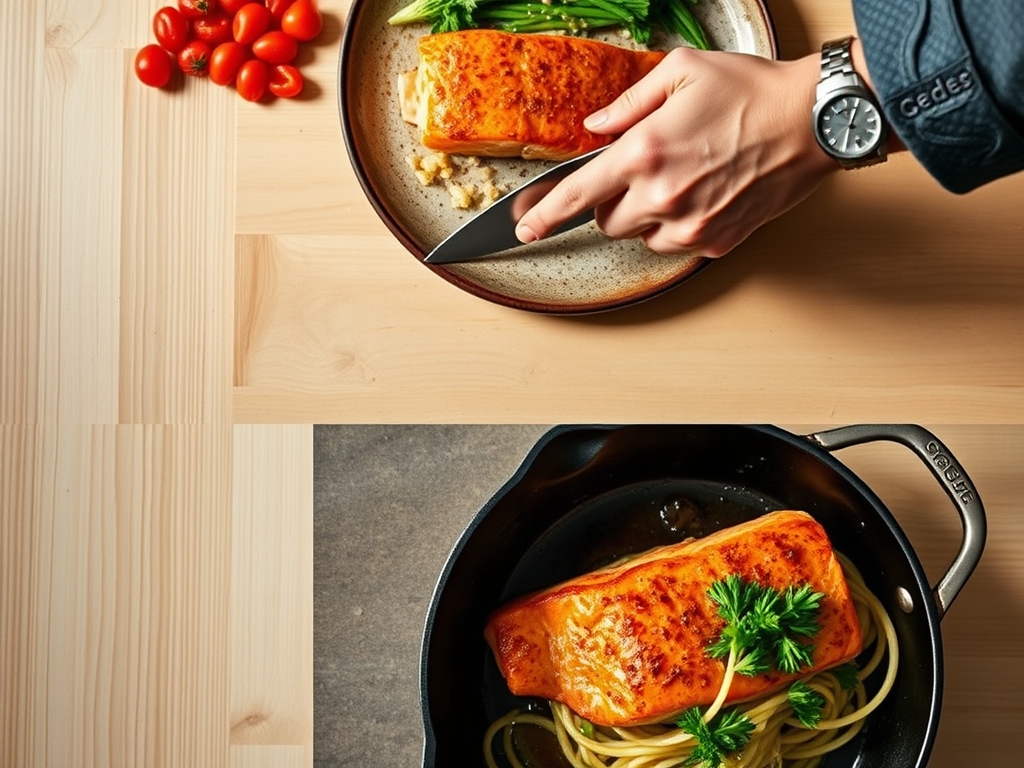
Place your heavy-bottomed skillet over medium-high heat. Add the oil and wait for it to shimmer. Lay the salmon skin-side down, pressing firmly with a spatula for thirty seconds to prevent the protein fibers from curling.
Pro Tip: This prevents the contraction of collagen. By applying physical pressure, you force the skin to stay flat, ensuring every millimeter makes contact with the heat for an even, glass-like crunch.
3. The Aromatics Infusion
Once the skin is golden and releases easily from the pan, add the crushed garlic and thyme. Toss in a knob of butter. As it foams, it will aerate and pick up the herbal notes.
Pro Tip: This is lipid-mediated extraction. The fats in the butter act as a solvent, pulling the fat-soluble flavor compounds out of the herbs and garlic and depositing them directly onto the fish.
4. The Arrosé Technique
Tilt the pan so the hot, flavored butter pools at the bottom. Use a large spoon to rapidly and continuously pour the hot fat over the raw top of the salmon.
Pro Tip: This is a form of convection cooking. You are gently cooking the top of the fish with hot fat while the bottom continues to sear, creating a gradient of texture that remains incredibly moist.
5. The Oven Transition
Move the entire pan into a preheated oven at 400 degrees Fahrenheit for three to four minutes. This provides an omnidirectional heat source to finish the center.
Pro Tip: This utilizes thermal carryover. If you take the fish out when it is exactly at your target temperature, it will overcook on the plate. Pull it 5 degrees early and let the residual heat finish the job.
6. The Rest and Deglaze
Remove the fish and let it rest on a warm plate. While the pan is still hot, deglaze it with a splash of white wine or lemon juice to pick up the fond (the browned bits) for a quick pan sauce.
Pro Tip: Resting allows the viscous juices to redistribute. During cooking, the proteins tighten and push moisture toward the center; resting lets those fibers relax so the juice stays in the fish when you cut it.
The Deep Dive:
From a macro perspective, salmon is a nutritional powerhouse, offering roughly 20 grams of protein and 12 grams of healthy fats per 100-gram serving. It is naturally Keto and Gluten-Free. For a vegan alternative, large "steaks" of cauliflower or king oyster mushrooms can be treated with the same searing and basting techniques, though they lack the same protein structure.
The Fix-It: If your skin is sticking, you likely tried to flip it too early; wait for the protein to naturally release. If you see white "goo" (albumin) seeping out, the heat was too high too fast, forcing the protein to contract violently. Lower the heat next time. If the interior is dry, you skipped the resting phase.
For meal prep, never microwave salmon. The high-frequency waves vibrate the water molecules so violently they toughen the protein. Instead, reheat it in a low oven (275 degrees) with a splash of water covered in foil to create a gentle steam environment that preserves the "day-one" flake.
The Wrap-Up:
You now hold the keys to the kingdom of gordon ramsay salmon recipes baked with scientific flair. By understanding the relationship between moisture, heat, and fat, you have moved beyond following a recipe to mastering a technique. Use your bench scraper to keep your station clean, trust your digital scale, and always listen for that perfect sizzle. Cooking is a blend of chemistry and intuition; now go put that knowledge on a plate and enjoy the most succulent salmon of your life!
The Kitchen Table:
How do I stop salmon from sticking to the pan?
Ensure the pan is hot and the skin is bone-dry. Use a high-smoke-point oil and do not attempt to flip the fish until the protein has naturally released from the surface through the Maillard reaction.
What is the white stuff on cooked salmon?
That is albumin, a liquid protein that solidifies when heated. It is harmless but indicates the fish was cooked too quickly or at a temperature that was too high, causing the muscle fibers to contract and squeeze it out.
Can I bake salmon without searing it first?
Yes, but you will miss the textural contrast of crispy skin. For a purely baked version, use a parchment paper "en papillote" method to steam the fish in its own juices with aromatics for a delicate, poached texture.
How do I know when salmon is perfectly done?
The most reliable method is using a digital thermometer to reach an internal temperature of 125 to 130 degrees Fahrenheit for medium-rare. Alternatively, a metal skewer inserted into the center should feel warm, not hot, when touched to your lip.