
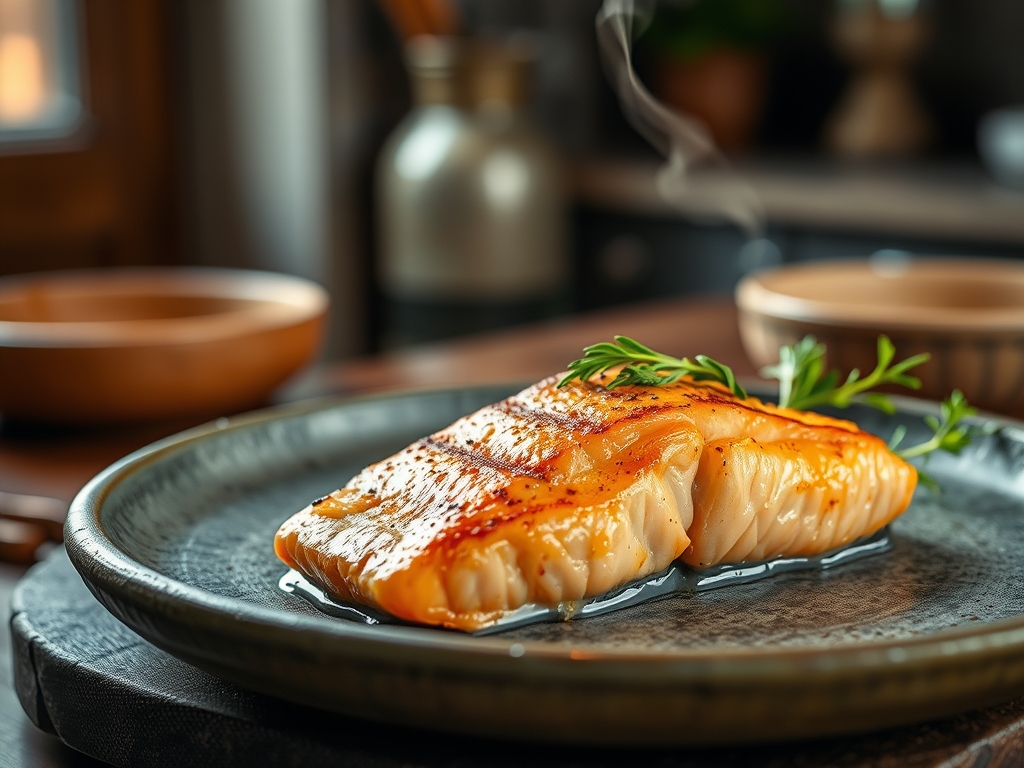
Imagine the sound of a heavy-bottomed stainless steel skillet meeting a high-flame burner; that sharp, metallic ring is the opening bell for a culinary masterpiece. You are standing in your sanctuary, the air thick with the scent of sea salt and lemon zest. When we look for the kitchen salmon recipes that truly define a weeknight win, we are chasing that elusive combination of a glass-shatter crisp skin and a center that yields like softened butter. It is not just about dinner; it is about the physics of heat transfer and the chemistry of flavor. We are moving beyond basic baking into a realm where every sear is intentional and every glaze is a calculated infusion of piquant and sweet notes.
Whether you are hosting a sophisticated dinner party or just trying to survive a Tuesday, the secret lies in the ritual. Salmon is a fatty, forgiving canvas, but it demands respect for its cellular structure. We are going to treat these fillets like the crown jewels of the sea. By the time we are done, you will understand exactly why certain temperatures trigger the Maillard reaction and how to prevent the dreaded albumin bleed. Grab your favorite apron and a glass of crisp Sauvignon Blanc; we are about to turn your stove into a high-performance laboratory of deliciousness.
The Gathers:
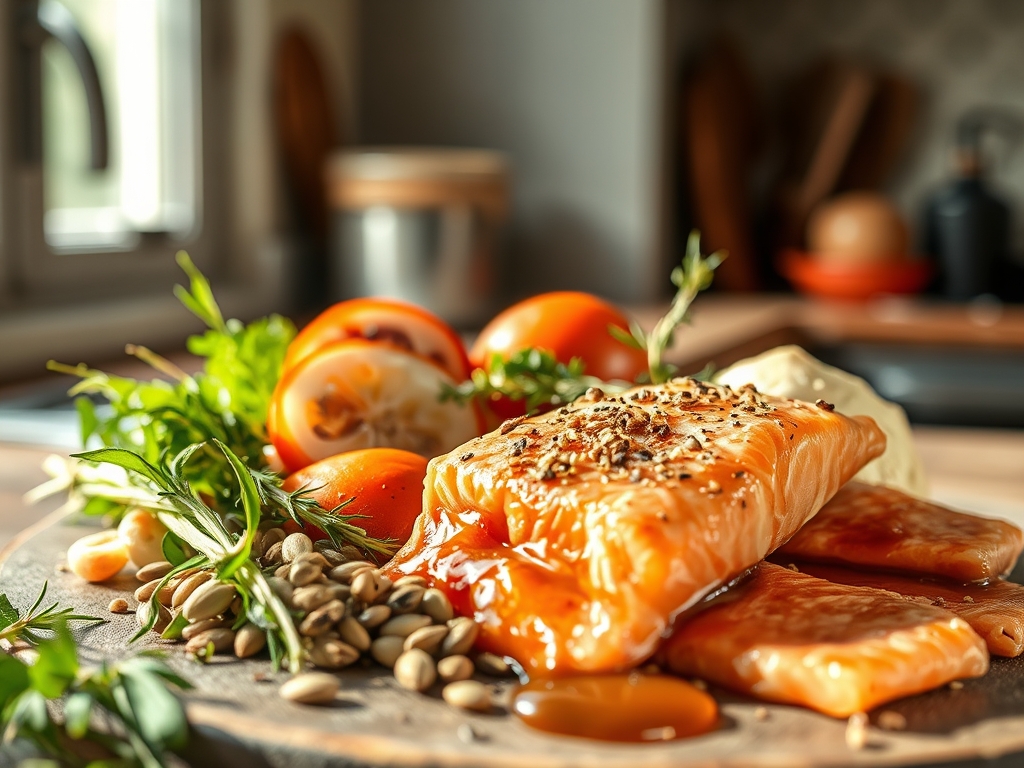
To execute the kitchen salmon recipes with precision, your mise-en-place must be flawless. Start with four center-cut Atlantic or King salmon fillets, approximately six ounces each. Look for deep pigmentation and firm muscle fibers; this indicates a high concentration of astaxanthin, a powerful antioxidant. You will need high-smoke-point fats like avocado oil or clarified butter. Unlike extra virgin olive oil, these fats can withstand the 400 degree Fahrenheit threshold required for a professional sear without breaking down into acrid compounds.
Your flavor profile relies on a viscous glaze: gather raw honey, aged balsamic vinegar, and Dijon mustard. For aromatics, reach for fresh thyme and garlic cloves that you will crush to release their essential oils. Smart Substitutions: If you are avoiding honey, a maple syrup reduction offers a similar sugar density for caramelization. For those sensitive to dairy, replace the butter finish with a cold-pressed nut oil to maintain that velvety mouthfeel. Ensure you have your microplane ready for citrus zest and a digital scale to ensure your seasoning ratios are mathematically perfect.
The Clock: Chef's Flow
Efficiency in the kitchen is about managing the "thermal momentum." Your total active time is exactly 12 minutes, with a 10-minute preparation window. The "Chef's Flow" dictates that you temper your fish at room temperature for 15 minutes before it ever touches the pan. This prevents a "thermal shock" where the exterior burns while the interior remains ice-cold.
Preheating your skillet takes 3 minutes. The searing process occupies 5 minutes on the skin side to render the subcutaneous fat, followed by a 2-minute flip to finish the proteins. Finally, a 3-minute resting period is non-negotiable. This allows the internal juices, which have been pushed toward the center by the heat, to redistribute through the muscle fibers, ensuring every bite is moist.
The Masterclass:
1. The Desiccation Ritual
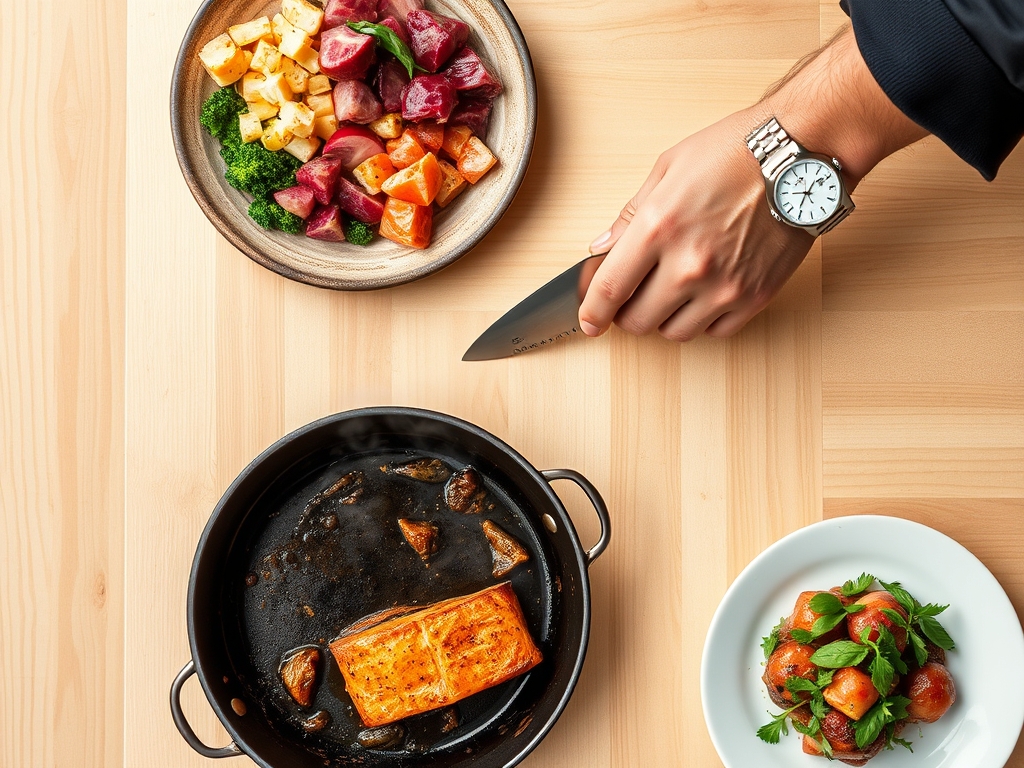
Use a lint-free paper towel to pat the salmon skin until it is bone-dry. Moisture is the enemy of the Maillard reaction; if there is water on the surface, the heat will spend its energy evaporating that liquid rather than browning the fish. Pro Tip: The science of evaporation cooling means that damp skin will steam instead of crisping. Use a sharp knife to lightly score the skin, which prevents the fillet from curling as the collagen fibers contract.
2. The High-Conductivity Sear
Place your heavy-bottomed skillet over medium-high heat until the oil shimmers but does not smoke. Lay the salmon away from you to avoid oil splatter. Press down firmly with a flexible fish spatula for the first 30 seconds. Pro Tip: This physical pressure ensures maximum surface-area contact, facilitating rapid heat transfer. This prevents the skin from buckling and creates an even, golden crust.
3. The Aromatics Infusion
Once the skin is crisp, reduce the heat and toss in your crushed garlic and thyme. Add a knob of butter and let it foam. Use a large spoon to continuously baste the hot, flavored fat over the raw top of the fish. Pro Tip: This technique, known as arroser, uses convection to cook the top of the fish gently while the butter solids undergo enzymatic browning, adding a nutty complexity to the flavor profile.
4. The Glaze Emulsification
Whisk your honey, balsamic, and mustard in a small saucier until the mixture is completely homogenous. Pour this into the pan during the final 60 seconds of cooking. Pro Tip: The sugars in the glaze will rapidly dehydrate and bond with the proteins in the fish. This creates a glossy, viscous coating that clings to the fillet rather than sliding off into the pan.
5. The Thermal Carryover Rest
Remove the salmon from the pan when the internal temperature hits 125 degrees Fahrenheit. Place it on a warm plate, skin-side up. Pro Tip: Thermal carryover will continue to raise the internal temperature by another 5 to 10 degrees while the fish rests. If you wait until it is "done" in the pan, it will be overcooked by the time it reaches the table.
6. The Acidic Brightening
Finish the dish with a microplane of lemon zest and a sprinkle of flaky sea salt. The salt provides a textural contrast, while the citric acid acts as a flavor bridge. Pro Tip: Acid cuts through the heavy lipids in the salmon, resetting your palate after every bite and making the rich flavors feel lighter and more vibrant.
The Deep Dive:
From a macro nutrition perspective, salmon is a powerhouse of Omega-3 fatty acids, specifically EPA and DHA, which support cognitive function. A standard six-ounce serving provides roughly 34 grams of high-quality protein and zero carbohydrates, making it a staple for Keto and Paleo lifestyles. For a vegan alternative, use the same glaze techniques on thick slabs of roasted cauliflower or "tofu steaks" to mimic the savory-sweet profile.
The Fix-It:
- White Stuff Appearing: This is albumin, a protein that squeezes out when fish is cooked too fast. Solution: Lower your heat and use the basting method to cook more gently.
- Skin Sticking: This happens if the pan wasn't hot enough or was "green" (unseasoned). Solution: Deglaze the pan with a splash of white wine to loosen the proteins.
- Soggy Skin: This is caused by trapped steam. Solution: Never cover the pan with a lid and always rest the fish on a wire rack if you aren't serving it immediately.
For meal prep, reheating salmon is a delicate science. Avoid the microwave, which vibrates water molecules and toughens the protein. Instead, place the fillet in a 275 degree Fahrenheit oven with a teaspoon of water and cover it tightly with foil. This creates a gentle steam chamber that restores moisture without overcooking the delicate fats.
The Wrap-Up:
Mastering the kitchen salmon recipes is about more than just following a list of ingredients; it is about understanding the dance between heat and fat. When you hear that skin crackle and see the glaze turn into a shimmering mahogany coating, you are witnessing culinary physics in action. You now have the tools, from the microplane to the fish spatula, to execute a restaurant-quality meal in your own home. Go forth and sear with confidence; your kitchen is now the hottest bistro in town!
The Kitchen Table:
How do I know when the salmon is perfectly cooked?
The most reliable method is using a digital thermometer to reach an internal temperature of 130 degrees Fahrenheit. Alternatively, press the top of the fillet; if the flakes begin to separate easily under light pressure, it is ready to rest.
Why does my salmon skin always turn out rubbery?
Rubbery skin is caused by residual moisture or insufficient heat. Ensure the skin is completely dry before hitting the pan. Use a high-smoke-point oil and maintain medium-high heat to properly render the fat and create a crisp texture.
Can I use frozen salmon for these recipes?
Yes, but you must thaw it completely in the refrigerator. Pat it extremely dry to remove excess moisture from the freezing process. Frozen salmon often has more surface water, so extra desiccation is required for a proper sear.
What is the best way to store leftover cooked salmon?
Store leftovers in an airtight glass container for up to three days. To maintain quality, keep the glaze separate if possible. Reheat gently using the low-temperature oven method to prevent the proteins from becoming rubbery or dry.