
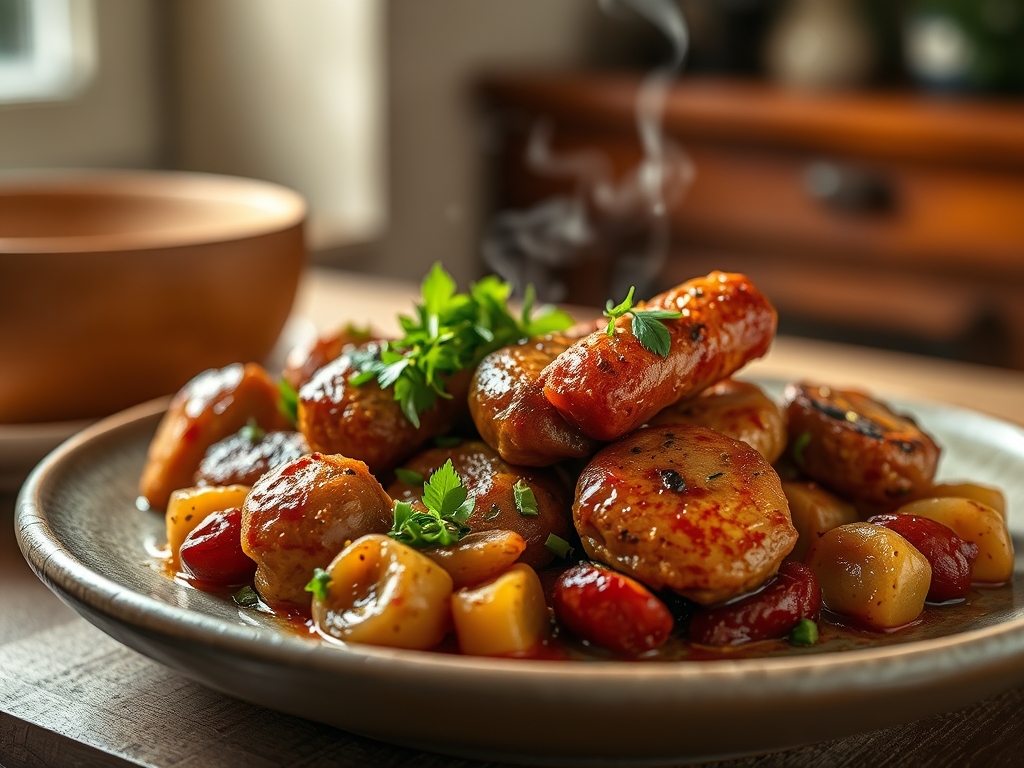
Picture the scene. Your kitchen is thick with the scent of smoked paprika and rendering pork fat; it is the kind of aroma that demands you pour a glass of wine before you even find your apron. When you master andouille sausage and chicken recipes, you are not just making dinner; you are conducting a symphony of smoke, heat, and soul.
The magic lies in the contrast. You have the lean, succulent profile of the chicken acting as a canvas for the aggressive, piquant personality of the andouille. Whether you are folding them into a silky pasta or a charred sheet pan bake, this duo represents the peak of flavor efficiency. It is the ultimate culinary power couple. We are going to dive into six distinct ways to marry these proteins, ensuring every bite is a masterclass in texture and depth. Grab your heavy-bottomed skillet; we are about to turn your kitchen into the best bistro in town.
The Gathers:
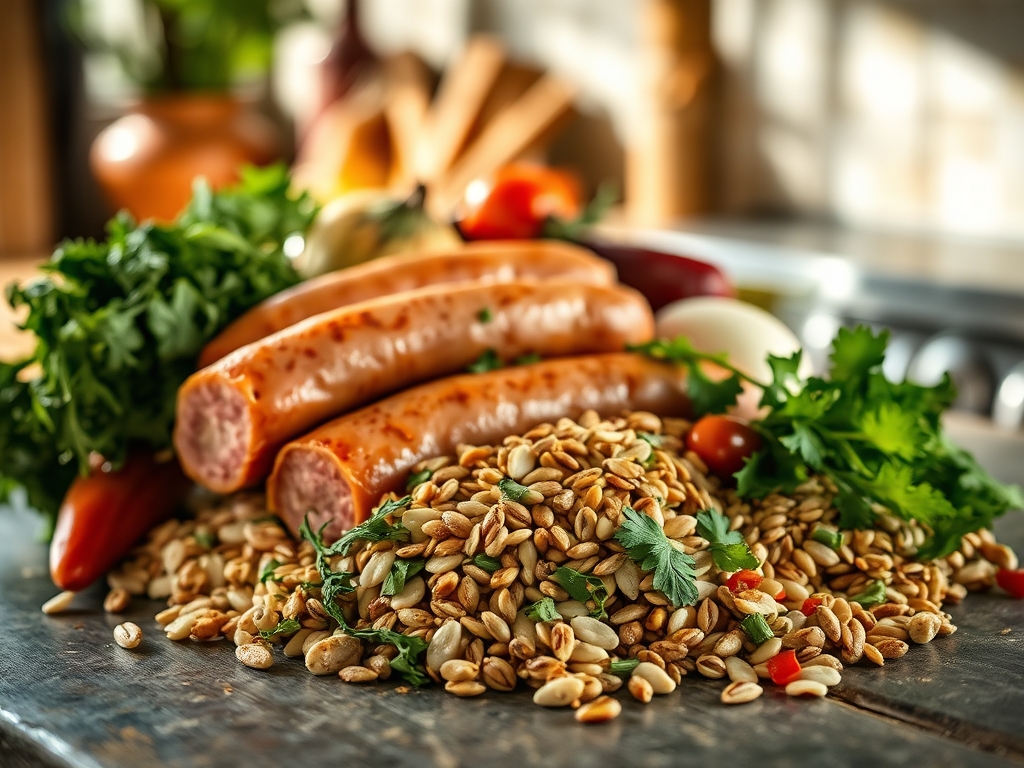
To execute these andouille sausage and chicken recipes with precision, your mise-en-place must be impeccable. We start with the andouille. Look for links that feel firm; this indicates a high density of lean meat to fat, ensuring it will render beautifully without disintegrating. For the chicken, I prefer boneless, skinless thighs. They possess more connective tissue than breasts, which breaks down into gelatin during the cooking process, providing a superior mouthfeel and moisture retention.
Your aromatics are the "Holy Trinity" of Cajun cooking: celery, onions, and green bell peppers. When chopped finely with a sharp chef's knife, these vegetables release sulfurous compounds and sugars that form the flavor base. You will also need high-quality chicken stock with a high protein content to ensure a viscous sauce, plus a selection of spices like cayenne, dried thyme, and garlic powder.
Smart Substitutions:
If you cannot find authentic andouille, a spicy Spanish Chorizo is your best bet for that smoky kick. For a lighter version, turkey andouille works surprisingly well, provided you add a teaspoon of liquid smoke to mimic the traditional wood-fired profile. If you are avoiding nightshades, swap the bell peppers for finely diced fennel to maintain that essential crunch.
The Clock:
Time is a physical ingredient in these recipes. Most of these combos require about 20 minutes of active prep; this involves the precision dicing of your proteins and aromatics. The "Chef's Flow" is critical here. You should be dicing your vegetables while the chicken is coming to room temperature on your cutting board.
Actual cook times range from 15 minutes for a high-heat stir-fry to 45 minutes for a slow-simmered jambalaya style dish. By utilizing a digital scale to ensure uniform chicken pieces, you guarantee that everything finishes at the exact same moment. This prevents the dreaded "rubbery chicken" syndrome while allowing the sausage to fully infuse the oil with its signature red hue.
The Masterclass:
1. The Sear and Render
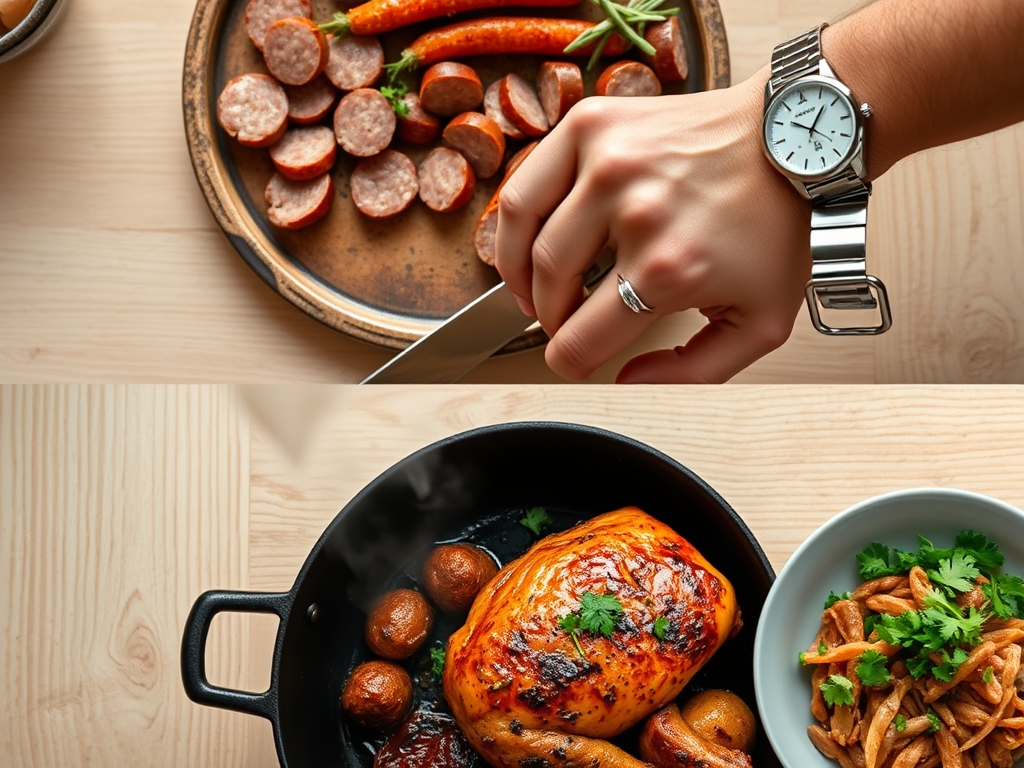
Place your sliced andouille into a cold, heavy-bottomed skillet and then turn the heat to medium. Starting cold allows the fat to render out slowly, which provides the perfect cooking medium for the chicken. Once the sausage is crisp, remove it with tongs, leaving the liquid gold behind.
Pro Tip: This is the Maillard reaction in action. By browning the meat, you are creating hundreds of new flavor compounds that do not exist in raw meat.
2. The Chicken Sauté
Increase the heat to medium-high and add your seasoned chicken thighs. Do not crowd the pan; if you add too much meat at once, the temperature drops and the meat steams in its own juices rather than searing.
Pro Tip: Use a digital meat thermometer to pull the chicken at 160 degrees Fahrenheit. Thermal carryover will bring it to the safe 165 mark while it rests, keeping it juicy.
3. Deglazing the Fond
Once the chicken is removed, you will see brown bits stuck to the bottom of the pan. This is called fond. Pour in a splash of dry white wine or chicken stock and use a wooden spoon to scrape it up.
Pro Tip: This process is called deglazing. The liquid dissolves the caramelized proteins, incorporating them back into your sauce for an incredible depth of flavor.
4. Integrating the Trinity
Add your onions, celery, and peppers to the pan. Sauté until the onions are translucent. This is when you add your garlic using a microplane for a fine paste that melts into the oil.
Pro Tip: Sweating the vegetables breaks down their cellulose walls, allowing their natural sugars to caramelize and balance the heat of the andouille.
5. The Emulsion Phase
Return the meats to the pan and add your liquid base, whether it is heavy cream for a pasta or stock for a stew. Stir vigorously to emulsify the fats with the liquids.
Pro Tip: A stable emulsion creates a velvety texture that coats the back of a spoon. If the sauce looks oily, add a tablespoon of cold butter and whisk rapidly to aerate and bind the fats.
6. The Final Infusion
Lower the heat and let the mixture simmer for five minutes. This allows the spices from the sausage to migrate into the chicken and the sauce, creating a cohesive flavor profile.
Pro Tip: This is the diffusion process. Flavors move from areas of high concentration (the sausage) to low concentration (the sauce), ensuring every bite is balanced.
The Deep Dive:
Macro Nutrition:
These recipes are protein powerhouses. On average, a serving provides 35g of protein, 18g of fat, and 10g of carbohydrates (depending on your choice of starch). To lower the fat content, you can blot the rendered sausage fat with a paper towel before adding the vegetables.
Dietary Swaps:
- Keto: Serve the mixture over cauliflower rice or sautéed zucchini ribbons.
- Gluten-Free: Ensure your andouille is certified GF, as some brands use wheat-based fillers. Use cornstarch or arrowroot powder to thicken sauces.
- Vegan: Use soy-based "chorizo" and oyster mushrooms to replicate the texture of chicken.
The Fix-It:
- Too Salty: Do not add salt until the very end. The sausage is naturally high in sodium. If it is too salty, add a squeeze of lemon juice; the acid masks the perception of salt.
- Broken Sauce: If your cream sauce separates, whisk in a splash of warm water and a bit of mustard. The mustard acts as a natural emulsifier.
- Tough Chicken: This usually means it was boiled rather than seared. Next time, ensure your pan is piping hot before the chicken hits the surface.
Meal Prep:
When reheating, do not use the microwave on high power. The intense waves cause the fats to separate and the chicken to turn "rubbery." Instead, use a saucier on the stovetop over low heat, adding a tablespoon of water to restore the sauce's viscosity.
The Wrap-Up:
Mastering andouille sausage and chicken recipes is a gateway to high-level flavor building. You have learned how to manage heat, execute a perfect deglaze, and respect the science of the sear. These six combos are versatile enough for a Tuesday night but sophisticated enough for a Saturday dinner party. Now, take these techniques, trust your palate, and go create something legendary in your kitchen.
The Kitchen Table:
What is the best way to slice andouille?
Slice the links on a bias (at an angle). This increases the surface area for the Maillard reaction, leading to more crispy, caramelized edges and a more professional presentation.
Can I use chicken breast instead of thighs?
Yes, but be careful. Breasts lack the fat and collagen of thighs, making them prone to drying out. Cook them quickly over high heat and remove them the moment they hit temperature.
How do I store leftovers safely?
Transfer the mixture to an airtight glass container within two hours of cooking. It will stay fresh in the refrigerator for up to four days or in the freezer for three months.
Why is my sauce watery?
You likely did not reduce the liquid enough. Simmer the sauce without a lid to allow evaporation, or use a "beurre manié" (equal parts flour and butter) to thicken it instantly.