
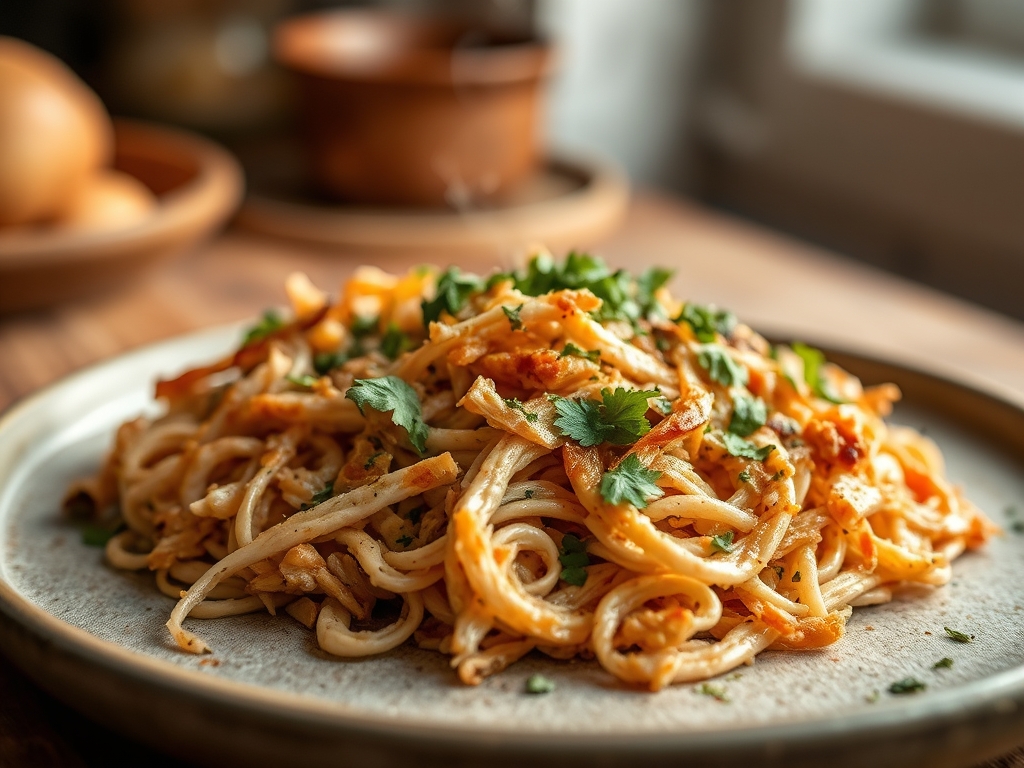
Imagine the scent of slow-roasted poultry lingering in your kitchen; that savory, umami-rich aroma is the result of complex amino acids undergoing the Maillard reaction. We have all been there. You have a massive bowl of cold, pre-cooked protein staring at you from the fridge, and the thought of another dry sandwich feels like a culinary tragedy. However, that humble bird is actually a blank canvas for high-velocity flavor. By understanding the molecular structure of lean protein, you can transform yesterday's meal into a gourmet experience. Whether you are aiming for a piquant lime-infused taco or a viscous, creamy pasta, mastering easy leftover shredded chicken recipes is about more than just convenience; it is about reclaiming the integrity of the ingredient. We are going to dive into the chemistry of texture and the physics of heat to ensure every bite is as succulent as the first. Grab your favorite heavy-bottomed skillet and a sharp pair of tongs; we are about to turn those leftovers into the star of the show.
The Gathers:
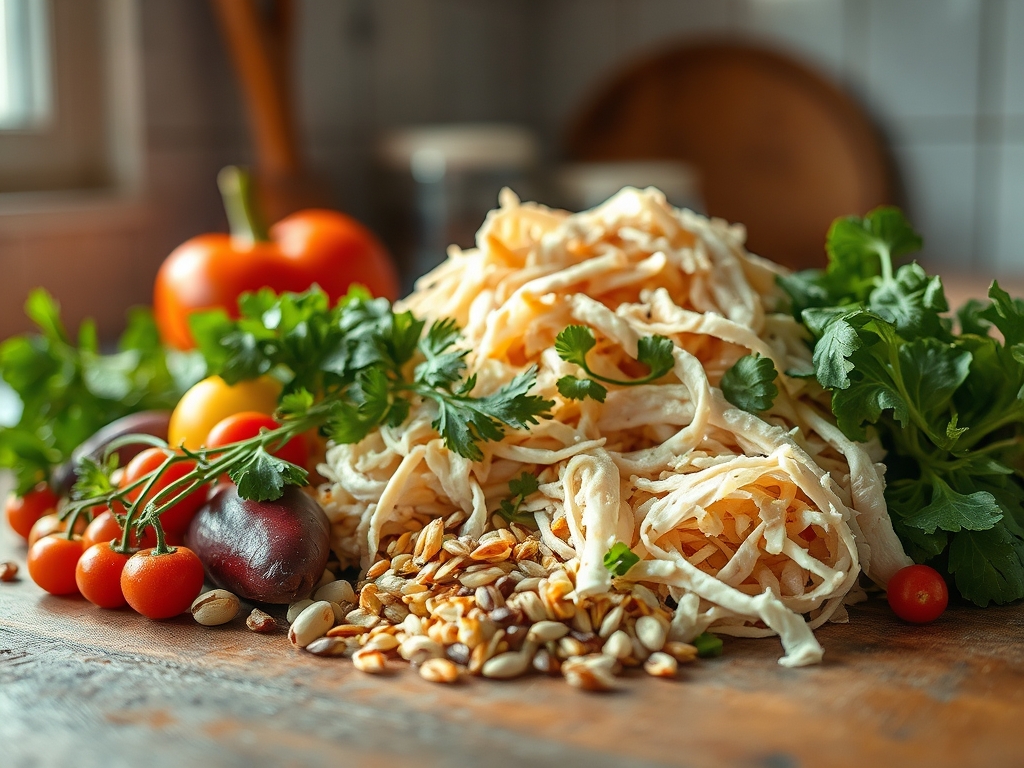
To execute these easy leftover shredded chicken recipes with precision, your mise-en-place must be organized by moisture content and volatile aromatics. Start with your base: approximately 500 grams of cold shredded chicken. Use a digital scale for accuracy; consistency in mass ensures even heat distribution later. You will need a high-quality fat source, such as grass-fed butter or cold-pressed olive oil, to act as a thermal conductor. For the aromatic foundation, finely dice shallots and garlic using a sharp chef's knife. The smaller the dice, the more surface area is available for the release of essential oils.
Smart Substitutions are the secret to kitchen agility. If you lack fresh aromatics, a dash of granulated garlic provides a concentrated sulfurous punch. For those avoiding dairy, a full-fat coconut milk offers the same viscous mouthfeel as heavy cream without the lactose. If your chicken feels particularly dehydrated, keep a jar of high-quality bone broth nearby. The gelatin content in bone broth is a natural emulsifier that helps coat the protein fibers, restoring the silkiness lost during the initial cooking process. Always have a microplane ready to zest citrus at the final moment; these volatile top notes are heat-sensitive and provide the necessary acidity to cut through rich fats.
The Clock: Chef's Flow
Efficiency in the kitchen is governed by "Chef's Flow," a method of overlapping tasks to minimize downtime. For these nine variations, the prep time is a mere 10 minutes, assuming your chicken is already shredded. The actual cook time ranges from 5 to 15 minutes depending on the complexity of the sauce or the need for starch hydration. Total time investment is roughly 25 minutes.
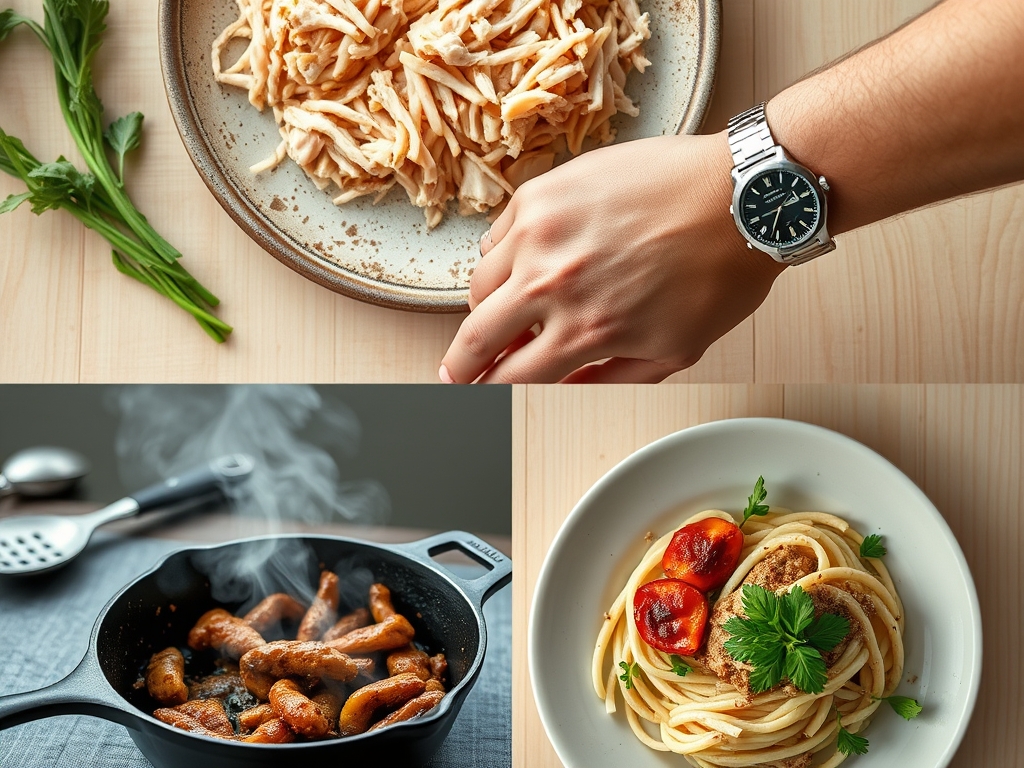
The logic of the flow dictates that you start with your longest-running chemical process. If you are making a chicken-based stir-fry, get your heavy-bottomed skillet screaming hot first. While the metal undergoes thermal expansion, you can slice your fibrous vegetables. By the time the pan is ready to deglaze, your ingredients are staged and ready. This prevents the "stalling" effect where the pan temperature drops too low, leading to steaming rather than searing.
The Masterclass:
1. The Velvety Enchilada Bake
Layer your shredded chicken with a piquant verde sauce and corn tortillas. Ensure the sauce is viscous enough to cling to the meat without making the base soggy.
Pro Tip: This relies on starch gelatinization. When the corn tortillas absorb the sauce, the starches swell and create a structural bond that prevents the dish from falling apart when sliced.
2. Pesto Chicken Power Bowls
Toss your protein with a vibrant basil pesto and quinoa. Use a bench scraper to quickly transfer chopped greens into the bowl to maintain their turgor pressure and crunch.
Pro Tip: Cold chicken has a closed cellular structure. Reheat it gently with a splash of water before adding pesto to allow the fats in the sauce to infuse into the meat fibers.
3. The 10-Minute Saucier Curry
Utilize a saucier to simmer coconut milk, red curry paste, and chicken. The rounded bottom of the saucier prevents the curry paste from scorching in the corners.
Pro Tip: This is an exercise in emulsification. The fats in the coconut milk encapsulate the capsaicin in the curry, delivering a smooth heat that does not overwhelm the palate.
4. Mediterranean Chicken Salad
Combine chicken with Greek yogurt, lemon zest, and capers. Avoid the "mush" factor by folding the ingredients gently with a silicone spatula rather than whisking.
Pro Tip: Acidulation is key here. The lemon juice acts as a denaturant, slightly firming the chicken proteins while the yogurt provides a protective lipid barrier against oxidation.
5. Buffalo Chicken Flatbreads
Spread a thin layer of buffalo sauce and blue cheese over a flatbread, topping with chicken and celery salt. Bake at high heat to achieve a crisp perimeter.
Pro Tip: Watch for the Maillard reaction on the cheese. The browning of the milk solids creates hundreds of new flavor compounds that complement the vinegary heat of the sauce.
6. The Ultimate Chicken Fried Rice
Use a wok to flash-fry cold rice and chicken. The high surface-to-volume ratio of the wok allows for rapid moisture evaporation, preventing the rice from becoming gluey.
Pro Tip: This technique utilizes the Leidenfrost effect. When the wet ingredients hit the lubricated, super-heated metal, they hover on a cushion of steam, preventing sticking.
7. Smoky Chicken Tacos
Rehydrate your chicken in a skillet with chipotle in adobo and a splash of lime. Use tongs to charred the tortillas directly over a gas flame for a smoky finish.
Pro Tip: Thermal carryover is vital. Remove the chicken from the heat when it reaches 155 degrees Fahrenheit; the residual energy will bring it to the food-safe 165 degrees without drying it out.
8. Creamy Chicken and Wild Mushroom Pasta
Deglaze a pan of sautéed mushrooms with white wine before adding chicken and heavy cream. The alcohol acts as a solvent, pulling flavors out of the mushrooms that water cannot.
Pro Tip: This is a reduction process. As the water evaporates, the solutes become more concentrated, resulting in a deep, savory profile known as "kokumi" or heartiness.
9. Crispy Chicken Quesadillas
Sandwich chicken and sharp cheddar between flour tortillas. Press down with a heavy weight to ensure maximum contact with the heat source.
Pro Tip: Conductive heating transforms the tortilla. The dry heat removes moisture from the surface, creating a brittle, crunchy lattice of starches that provides a satisfying textural contrast.
The Deep Dive:
From a macro nutrition perspective, shredded chicken is a powerhouse. A 100-gram serving typically yields 31 grams of protein with minimal lipids, making it an ideal post-workout fuel. For those following a Keto lifestyle, focus on adding healthy fats like avocado or heavy cream to your easy leftover shredded chicken recipes. Vegan friends can swap the chicken for pulled jackfruit or oyster mushrooms, which mimic the fibrous texture of poultry through their complex carbohydrate structures. Gluten-free adaptations are simple; swap wheat-based wraps for lettuce cups or almond-flour alternatives.
The Fix-It: If your chicken is too dry, do not just add water; add a fat-protein hybrid like bone broth or a pat of butter to restore the lipid barrier. If the dish is too salty, add a splash of acid (vinegar or citrus) to distract the taste buds. If the texture is "rubbery," you likely overcooked it during the reheat; next time, use a lower temperature and a lid to trap steam.
Meal prep success depends on reheating science. Avoid the microwave if possible, as it vibrates water molecules so violently they escape as steam, leaving the protein desiccated. Instead, use a covered skillet over medium-low heat with a tablespoon of liquid to create a gentle "steam oven" effect. This preserves the "day-one" quality and prevents the off-flavors associated with oxidized lipids.
The Wrap-Up:
Transforming your fridge staples into easy leftover shredded chicken recipes is the ultimate kitchen hack for the modern, busy gourmet. By respecting the science of heat and the chemistry of flavor, you turn a chore into a creative outlet. Remember, cooking is just delicious physics. Whether you are deglazing a pan or emulsifying a sauce, you are in control of the molecular magic. Now, go forth, grab those leftovers, and make something brilliant. Your dinner table is waiting for its next masterpiece.
The Kitchen Table:
How long does shredded chicken stay fresh?
Store shredded chicken in an airtight container in the refrigerator for three to four days. For longer storage, freeze it in vacuum-sealed bags for up to four months to prevent freezer burn and ice crystal formation.
What is the best way to reheat chicken without drying it?
Place chicken in a skillet with a splash of broth or water. Cover with a tight-fitting lid and heat over medium-low. The steam rehydrates the protein fibers, maintaining a succulent texture and preventing the meat from becoming tough.
Can I use leftover chicken in soups?
Absolutely. Add shredded chicken during the last five minutes of simmering. Since the chicken is already cooked, you only need to bring it to temperature. This prevents the protein from breaking down into a mealy, overcooked texture.
How do I fix bland leftover chicken?
Boost the flavor profile using acidity and aromatics. A squeeze of fresh lime, a dash of fish sauce for umami, or a sprinkle of finishing salt can brighten the flavor. Always toast spices in oil before adding them to unlock fat-soluble compounds.