
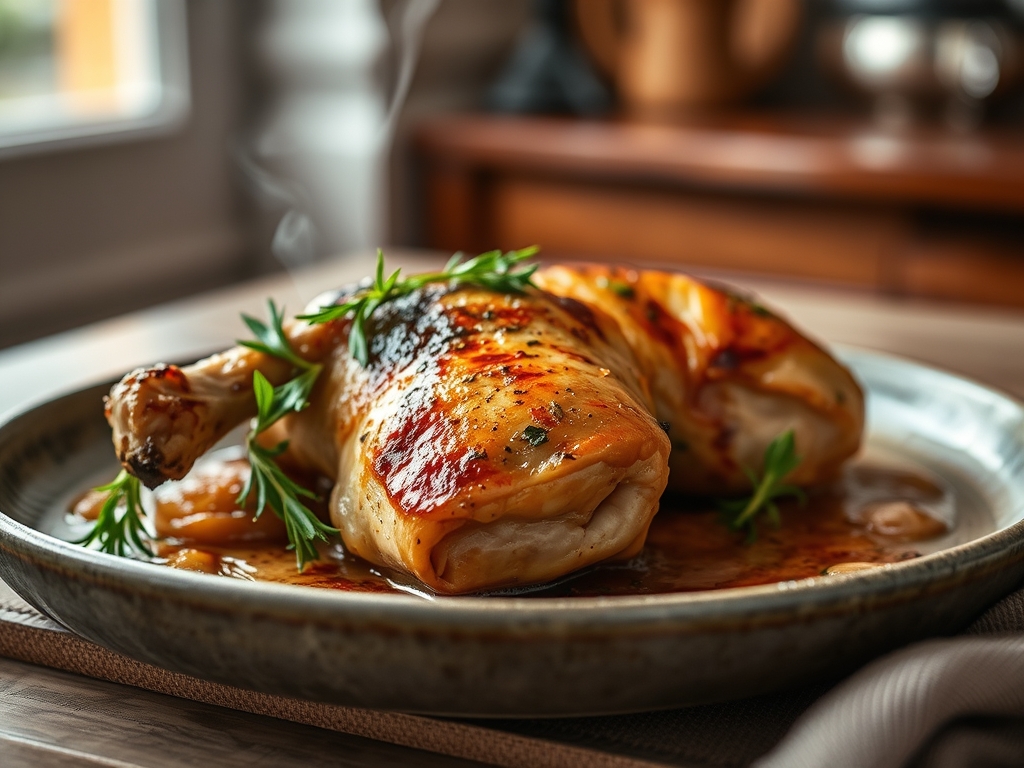
Imagine the scent of rendered schmaltz and toasted paprika wafting through your kitchen as the oven timer chirps its final alert. You pull out a tray of shimmering, mahogany-skinned poultry that crackles under the slightest pressure of a knife. Finding the absolute best baked quarter leg chicken recipes is about more than just dinner; it is about mastering the alchemy of high-heat roasting and fat emulsification.
The leg quarter is the unsung hero of the bird. It consists of the thigh and drumstick attached, offering a higher fat content than the breast, which ensures the meat remains succulent even under intense thermal pressure. Because these cuts are rich in connective tissue, they require a specific temperature threshold to convert tough collagen into silky gelatin. We are going to achieve that perfect balance of a glass-like exterior and a tender, fall-off-the-bone interior.
Grab your favorite apron and clear your workspace. We are diving into a culinary masterclass that treats the humble chicken leg with the reverence of a five-star entree. This is where science meets soul, and I am here to walk you through every sizzle and pop.
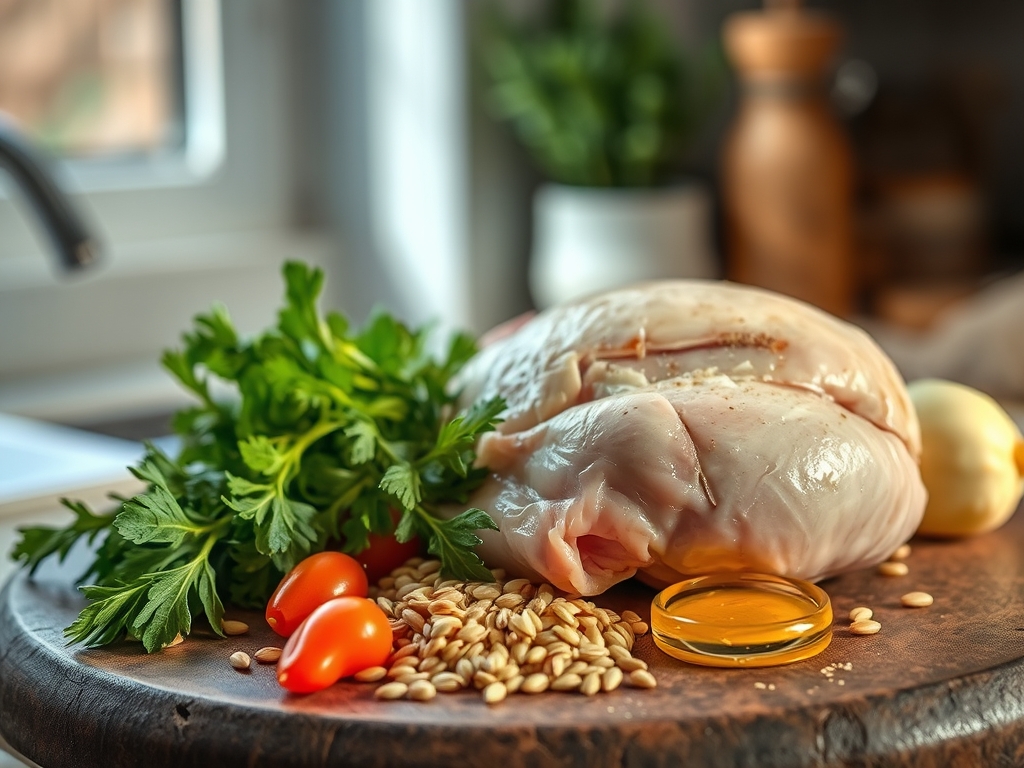
The Gathers:
To execute this recipe with precision, we must respect the mise-en-place. Use a digital scale to ensure your dry rub ratios are consistent, as salt density varies wildly between brands.
- The Protein: Six high-quality chicken leg quarters, approximately 12 to 14 ounces each. Look for skin that is intact and translucent.
- The Lipid: Extra virgin olive oil or clarified butter (ghee). Ghee has a higher smoke point, which prevents the fats from breaking down and becoming acrid at 425 degrees Fahrenheit.
- The Aromatics: Freshly minced garlic and smoked paprika. The paprika provides the phenols necessary for that deep, "fire-roasted" flavor profile.
- The Acid: Fresh lemon zest. Use a microplane to shave only the yellow flavedo, avoiding the bitter white pith.
- The Seasoning: Diamond Crystal kosher salt and cracked Tellicherry peppercorns.
Smart Substitutions: If you are out of smoked paprika, a teaspoon of chipotle powder adds a piquant heat. For a Mediterranean twist, swap the paprika for dried oregano and sumac. If you are avoiding poultry, this same dry-rub technique works beautifully on thick-cut cauliflower steaks, though the roasting time will decrease by half.
The Clock:
Mastering the "Chef's Flow" is about minimizing "dead air" in the kitchen.
- Prep Time: 15 minutes. This includes the crucial step of tempering the meat.
- Cook Time: 45 to 55 minutes.
- Resting Time: 10 minutes. Do not skip this; it is the difference between a juicy leg and a dry one.
The flow begins by preheating your oven and a heavy-bottomed baking sheet simultaneously. By the time you finish seasoning the chicken, the metal will be a high-heat conductor, searing the bottom of the quarters the moment they make contact. This prevents the "soggy bottom" syndrome common in home roasting.
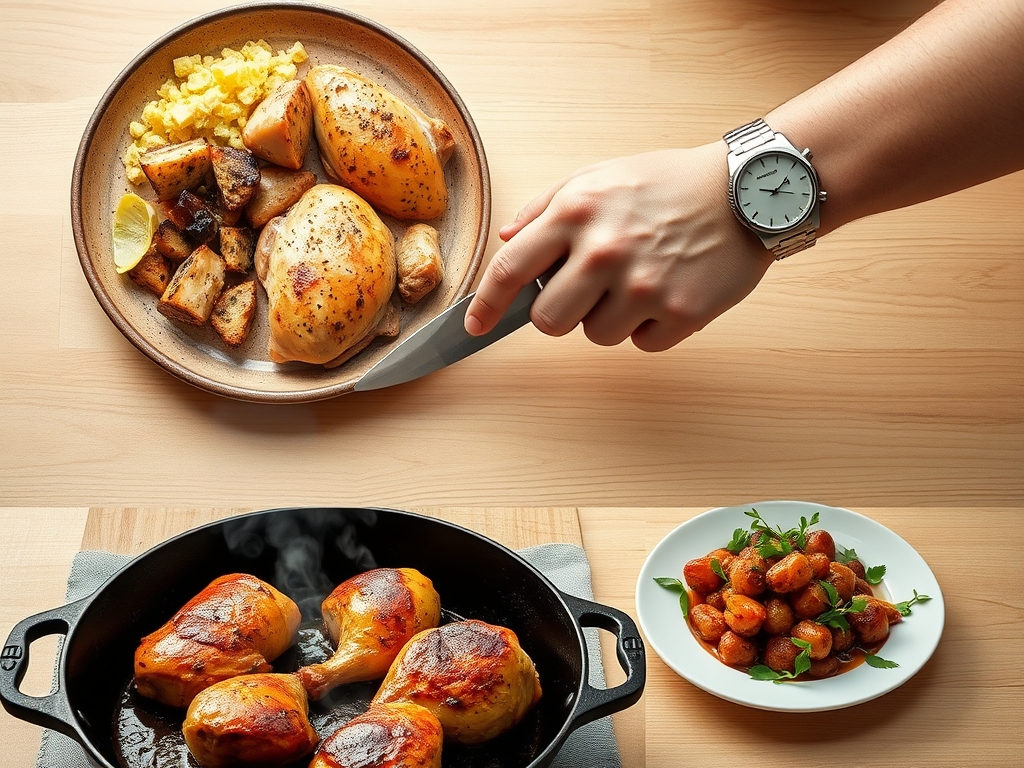
The Masterclass:
1. Temper and Dry the Protein
Remove the chicken from the refrigerator 20 minutes before cooking to lose its chill. Use paper towels to pat the skin until it is bone-dry.
Pro Tip: Moisture is the enemy of the Maillard reaction. If the skin is damp, the oven's energy will be wasted evaporating surface water rather than browning the proteins. This is known as latent heat of vaporization.
2. The Emulsion Rub
In a small saucier or bowl, whisk your oil, salt, spices, and lemon zest. Rub this mixture vigorously over every inch of the chicken, including under the skin.
Pro Tip: Salt acts as a denaturant. By applying it early, you allow the salt to penetrate the muscle fibers, which helps the meat retain its viscous juices during the high-heat roasting process.
3. The Initial Sear
Place the chicken skin-side up on the preheated tray. You should hear an immediate hiss. Use tongs to position them so they do not overlap.
Pro Tip: Overcrowding the pan creates a steam-rich microclimate. To get crispy skin, you need dry, circulating air to render the subcutaneous fat effectively.
4. The High-Heat Roast
Slide the tray into the center rack at 425 degrees Fahrenheit. Rotate the pan halfway through to account for oven hot spots.
Pro Tip: High heat triggers enzymatic browning. The sugars and amino acids on the skin surface reorganize into hundreds of flavor compounds, creating that complex, savory crust we crave.
5. The Temperature Check
Use an instant-read thermometer to check the thickest part of the thigh. You are looking for 170 to 175 degrees Fahrenheit for leg quarters.
Pro Tip: While breasts are done at 165, dark meat contains more collagen. Cooking to 175 degrees allows that collagen to fully melt, resulting in a superior, silky mouthfeel.
6. The Carryover Rest
Transfer the chicken to a wooden cutting board using a bench scraper or tongs. Let it rest uncovered for 10 minutes.
Pro Tip: Thermal carryover will cause the internal temperature to rise another 3 to 5 degrees. Resting allows the muscle fibers to relax and reabsorb the juices, ensuring they don't spill out when you take your first bite.
The Deep Dive:
Macro Nutrition: One roasted leg quarter typically contains 350 to 400 calories, 25 grams of protein, and 20 grams of fat. It is a powerhouse of Vitamin B12 and zinc.
Dietary Swaps:
- Keto: This recipe is naturally keto-compliant.
- Vegan: Use large oyster mushrooms or "Lion's Mane" clusters. Brush with liquid smoke and soy sauce to mimic the savory depth of chicken.
- GF: This recipe is naturally gluten-free.
The Fix-It:
- Rubbery Skin: Your oven temperature was likely too low. Fix it by cranking the broiler for the last 2 minutes of cooking.
- Burnt Spices: If using a rub with high sugar content, it may char. Fix this by tenting the chicken with foil halfway through.
- Dry Meat: You likely bypassed the rest period. Next time, use a thermometer to pull the meat at 170 degrees exactly.
Meal Prep & Reheating: To maintain "day-one" quality, avoid the microwave. Reheat leftovers in a 350-degree oven or an air fryer for 5 minutes. This re-crisps the skin and prevents the "warmed-over flavor" caused by lipid oxidation.
The Wrap-Up:
Mastering baked quarter leg chicken recipes is a fundamental skill that elevates your weeknight rotation from "fine" to "phenomenal." By understanding the science of fat rendering and the importance of surface dehydration, you turn a budget-friendly cut of meat into a culinary centerpiece. Remember, the secret is in the heat and the rest. Now, get into that kitchen and make some magic happen!
The Kitchen Table:
How do I get the skin extra crispy?
Ensure the skin is completely dry before oiling. Roast at a high temperature, at least 400 degrees Fahrenheit, to facilitate rapid fat rendering. Avoid crowding the pan, which creates steam and prevents the skin from dehydrating and browning properly.
Can I bake these from frozen?
It is not recommended. Baking from frozen leads to uneven cooking where the exterior overcooks before the interior reaches a safe temperature. Always thaw chicken in the refrigerator overnight to ensure the muscle fibers remain intact and juicy.
What is the best way to store leftovers?
Store leftovers in an airtight glass container for up to four days. To preserve the texture, do not stack the pieces, as the weight can make the skin soggy. Reheat in an oven to maintain the structural integrity of the skin.
Why is my chicken pink near the bone?
Pinkness near the bone is common in young chickens and is caused by pigment leaching from the marrow. As long as the internal temperature has reached 165 degrees Fahrenheit, the meat is safe and fully cooked.
Should I cover the chicken with foil while baking?
No, do not cover the chicken if you want crispy skin. Covering traps steam, which braises the meat rather than roasting it. Only use foil if the skin is browning too quickly before the center is cooked through.