
Picture this: the kitchen is a whirlwind of backpacks and soccer cleats, yet the air smells like caramelized citrus and toasted sesame. You are not hovering over a splattering pan or scrubbing five different pots. Instead, you are leaning against the counter with a glass of crisp Sauvignon Blanc while your oven does the heavy lifting. This is the magic of salmon recipes sheet pan style. It is the ultimate culinary hack for the modern family, blending the high-protein elegance of Atlantic salmon with the effortless cleanup of a single rimmed baking sheet. We are talking about flaky, succulent fillets nestled against charred seasonal greens and crispy root vegetables. The science of the sheet pan relies on conductive heat transfer; the metal sheet acts as a heat sink, ensuring that the bottom of your vegetables caramelizes while the top of the fish undergoes the Maillard reaction. This is not just a meal; it is a strategic victory for your weeknight sanity. By mastering these eight variations, you turn a chaotic Tuesday into a gourmet experience without the dishpan hands.
The Gathers:
To execute these salmon recipes sheet pan masterpieces, your mise-en-place must be precise. Start with high-quality salmon fillets, ideally center-cut for uniform thickness. You will need a viscous fat source, such as extra virgin olive oil or melted ghee, to act as a heat conductor and flavor carrier. Aromatics are non-negotiable; gather fresh garlic, ginger, and shallots. For the piquant notes, keep lemons, limes, and rice vinegar within reach. Your vegetable selection should be varied in texture: snap peas for crunch, asparagus for earthy notes, or baby potatoes for starch.
Smart Substitutions:
If you are out of fresh citrus, a splash of verjus or white balsamic vinegar provides that essential acid. No fresh herbs? Use a 1:3 ratio of dried herbs to fresh, but crush them in your palm first to release the volatile oils. For a dairy-free "creamy" element, a dollop of tahini or a splash of full-fat coconut milk works beautifully to infuse the dish with richness without the lactose.
The Clock:
The beauty of the "Chef's Flow" is efficiency. Total active prep time for these recipes is a mere 15 minutes, with a cook time ranging from 12 to 18 minutes depending on the density of your vegetables. The secret is the "staggered start." If you are roasting hearty vegetables like Brussels sprouts or sweet potatoes, they need a 10-minute head start in the oven before you nestle the salmon into the tray. This ensures the salmon reaches a perfect internal temperature of 145 degrees Fahrenheit just as the vegetables achieve a tender-crisp finish. Use a digital scale to portion your fillets to exactly 6 ounces; this uniformity ensures every piece of fish finishes at the exact same second.
The Masterclass:
1. The Surface Prep
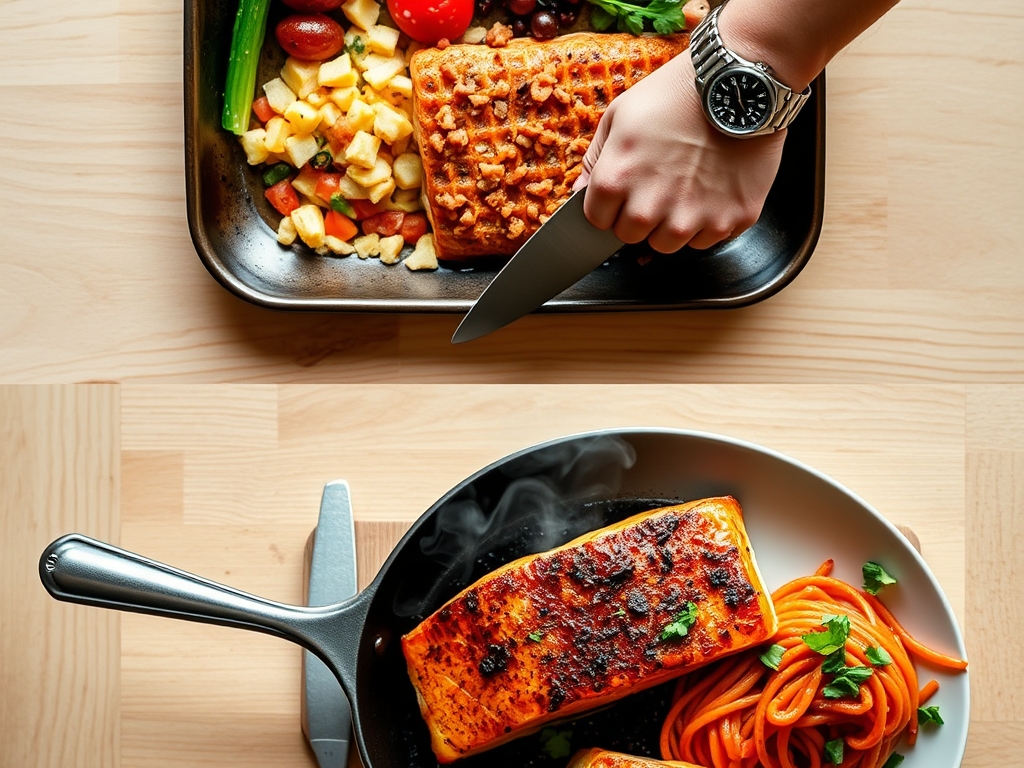
Line your heavy-duty rimmed baking sheet with parchment paper or a silicone mat. This prevents protein sticking and simplifies cleanup. Use a bench scraper to clear your cutting board of chopped aromatics efficiently.
Pro Tip: Drying the skin of the salmon with a paper towel is vital. Moisture is the enemy of the Maillard reaction; a dry surface allows the proteins to brown and develop deep flavor rather than steaming in their own juices.
2. The Emulsion Application
Whisk your marinade in a small saucier or bowl. Whether it is a honey-mustard glaze or a soy-ginger infusion, ensure the oil and acid are fully emulsified. Coat the salmon and vegetables thoroughly using a pastry brush to ensure even distribution.
Pro Tip: Adding a pinch of sugar or honey to your marinade facilitates enzymatic browning. This allows the exterior to caramelize quickly at high heat before the delicate interior overcooks.
3. The Strategic Layout
Arrange your ingredients in a single layer. Do not crowd the pan. If the vegetables are overlapping, they will release steam, resulting in a soggy texture rather than a roasted one. Use tongs to space the fillets at least two inches apart.
Pro Tip: Airflow is a critical component of convection. By leaving space between items, you allow hot air to circulate freely, which ensures the edges of your vegetables get those coveted "crispy bits."
4. The Thermal Finish
Slide the pan into the center rack of a preheated 425-degree oven. This high heat is necessary to render the fat in the salmon skin quickly. Monitor the progress through the oven window to avoid heat loss from opening the door.
Pro Tip: Understand thermal carryover. Remove the salmon when it is 5 degrees below your target temperature. The residual heat trapped in the dense muscle fibers will continue to cook the fish as it rests on the counter.
The Deep Dive:
From a nutritional standpoint, these salmon recipes sheet pan options are a powerhouse. Salmon is famous for its Omega-3 fatty acids, specifically EPA and DHA, which are essential for brain health. A standard 6-ounce serving provides roughly 34 grams of high-quality protein and 100 percent of your daily Vitamin B12 requirement.
Dietary Swaps:
For a Keto version, swap out root vegetables for cauliflower or zucchini. For Vegan family members, use the same marinades on thick slabs of cauliflower "steak" or extra-firm tofu pressed with a heavy-bottomed skillet. All these recipes are naturally Gluten-Free as long as you use tamari instead of traditional soy sauce.
The Fix-It:
- Soggy Vegetables: You likely overcrowded the pan. Next time, use two sheets or reduce the volume of watery veggies like zucchini.
- Dry Salmon: You missed the carryover window. Use a digital thermometer and pull the fish at 140 degrees Fahrenheit.
- Burnt Garlic: Garlic burns faster than salmon cooks. Tuck the garlic under the fillets or add it halfway through the roasting process to protect it from direct radiant heat.
Meal Prep Science:
To reheat salmon without it becoming rubbery, avoid the microwave. Use a toaster oven at 275 degrees with a splash of water and a foil cover. This creates a small steam chamber that rehydrates the protein fibers, maintaining that "day-one" flake and moisture.
The Wrap-Up:
Mastering the art of the sheet pan dinner is like finding a hidden gear in your kitchen. It is about working smarter, not harder, and using the principles of thermodynamics to feed your family well. These eight salmon recipes are your new blueprint for success. They are bold, vibrant, and scientifically sound. So, grab your microplane, zest that lemon, and watch how a simple sheet of metal transforms your dinner routine into a nightly celebration of flavor and efficiency. You have the tools, the tech, and the taste; now go own that kitchen.
The Kitchen Table:
How do I prevent salmon from sticking to the sheet pan?
Always use parchment paper or a high-quality silicone baking mat. Additionally, ensure the skin is patted completely dry and lightly coated in oil. This creates a lipid barrier that prevents the protein from bonding to the cooking surface.
What is the best temperature for sheet pan salmon?
A temperature of 425 degrees Fahrenheit is ideal. This high heat promotes the Maillard reaction on the surface and renders the fat in the skin quickly, ensuring the fish stays succulent inside while developing a flavorful, browned exterior.
Can I cook frozen salmon on a sheet pan?
It is best to thaw salmon first for even cooking. However, if cooking from frozen, increase the time by 50 percent and avoid glazing until the final five minutes to prevent the sugars from burning while the interior thaws.
How do I know when the salmon is perfectly cooked?
The most reliable method is using a digital thermometer to reach an internal temperature of 145 degrees Fahrenheit. Visually, the flesh should change from translucent to opaque and flake easily when pressed gently with a fork.
Which vegetables work best for one-pan salmon dinners?
Choose vegetables with similar cook times to salmon, such as asparagus, broccolini, or cherry tomatoes. For denser vegetables like potatoes or carrots, cut them into smaller pieces or give them a ten-minute head start in the oven.